Qatar Boombarrier® | Leading Boom Barrier Manufacturer

How to Reduce Vehicle Queues at a Parking Entrance
Release time:
2026-10-29
Vehicle queues appear when the number of cars in a short period reaches a level that exceeds the capacity of the entry point to handle them. The reason may be slow verification of permits, reliance on tickets and manual payment, poor lane design, or inconsistent speed at the checkpoint with the vehicle recognition system. In Doha, Lusail, commercial and residential complexes, peak hours can lead to delays for residents, employees and visitors if the access system is not designed for the expected flow of vehicles.
An effective solution is not just installing a faster barrier; Rather, it combines route planning, vehicle verification, safety sensors, exception management, and actual performance measurement. Qatar Boombarrier solutions, such as high-speed automated barriers, ANPR/LPR systems, RFID barriers, radar sensors or detection rings, can help build a more streamlined entry system when selected and configured according to site conditions.
1. Measure the queue before choosing a solution
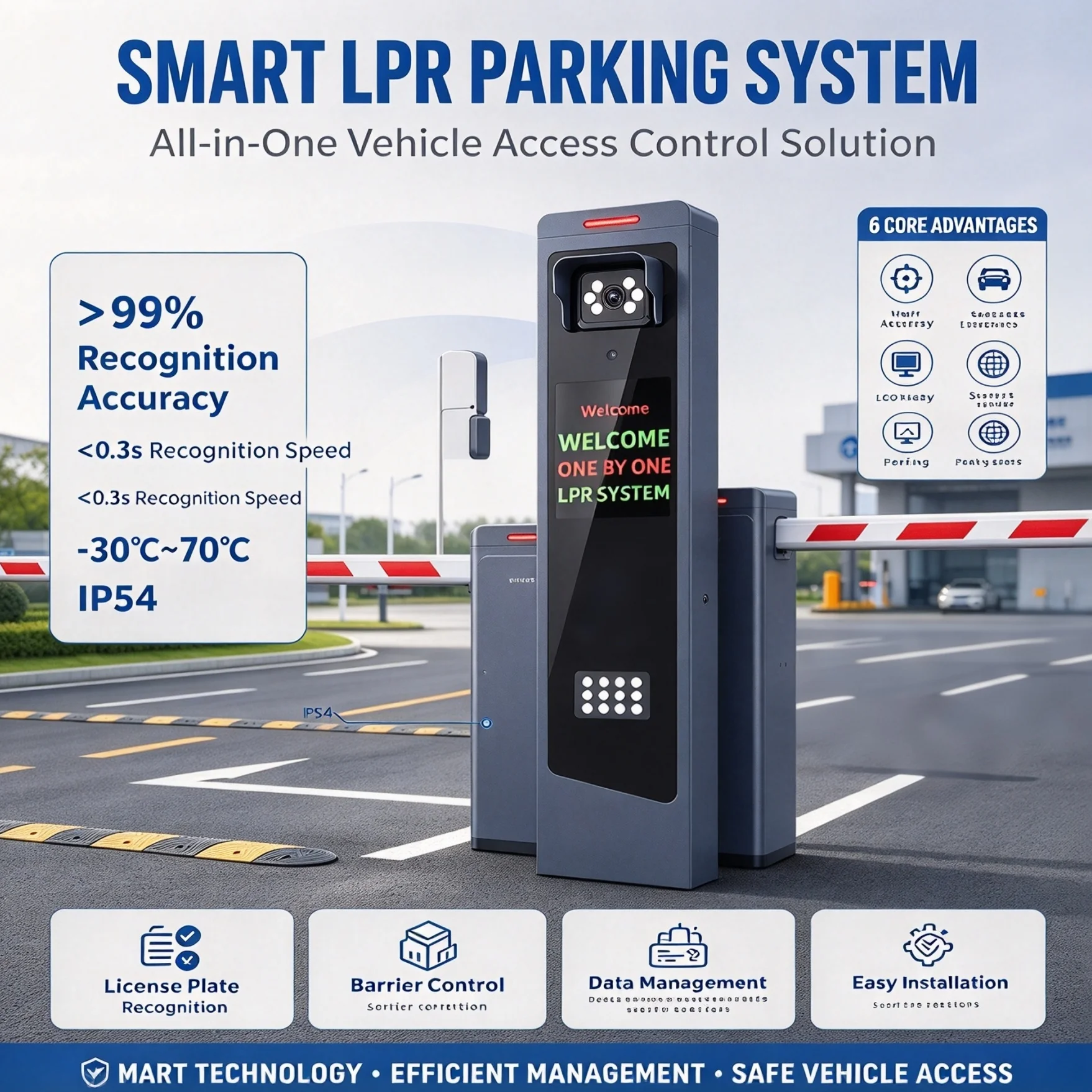
Start by recording the number of vehicles arriving during different periods, the average processing time per vehicle, the longest wait time, and the number of times a guard intervenes manually. Separate peak times from quiet periods, and record reasons for delays such as an illegible card, a plate that the system does not recognize, a payment problem, or an unregistered vehicle. This data helps determine whether the problem is with route capacity, verification speed, malfunctions, or operational procedures.
Don't rely on impression alone. If the lever opens quickly but cars wait due to manual checking, replacing the barrier alone will not solve the problem. If vehicles pass smoothly but the queue extends to the public road, you may need to redesign the waiting area or add a dedicated lane, after reviewing safety requirements and relevant local authorities.
2. Use ANPR/LPR automatic license plate recognition
The automatic license plate recognition system can read the car plate, compare it to the list of authorized vehicles, and then send an opening signal to the barrier when entry rules are met. This can reduce the need to show a card or manually enter data for each vehicle, especially in parking lots for employees, residents and pre-registered vehicles.
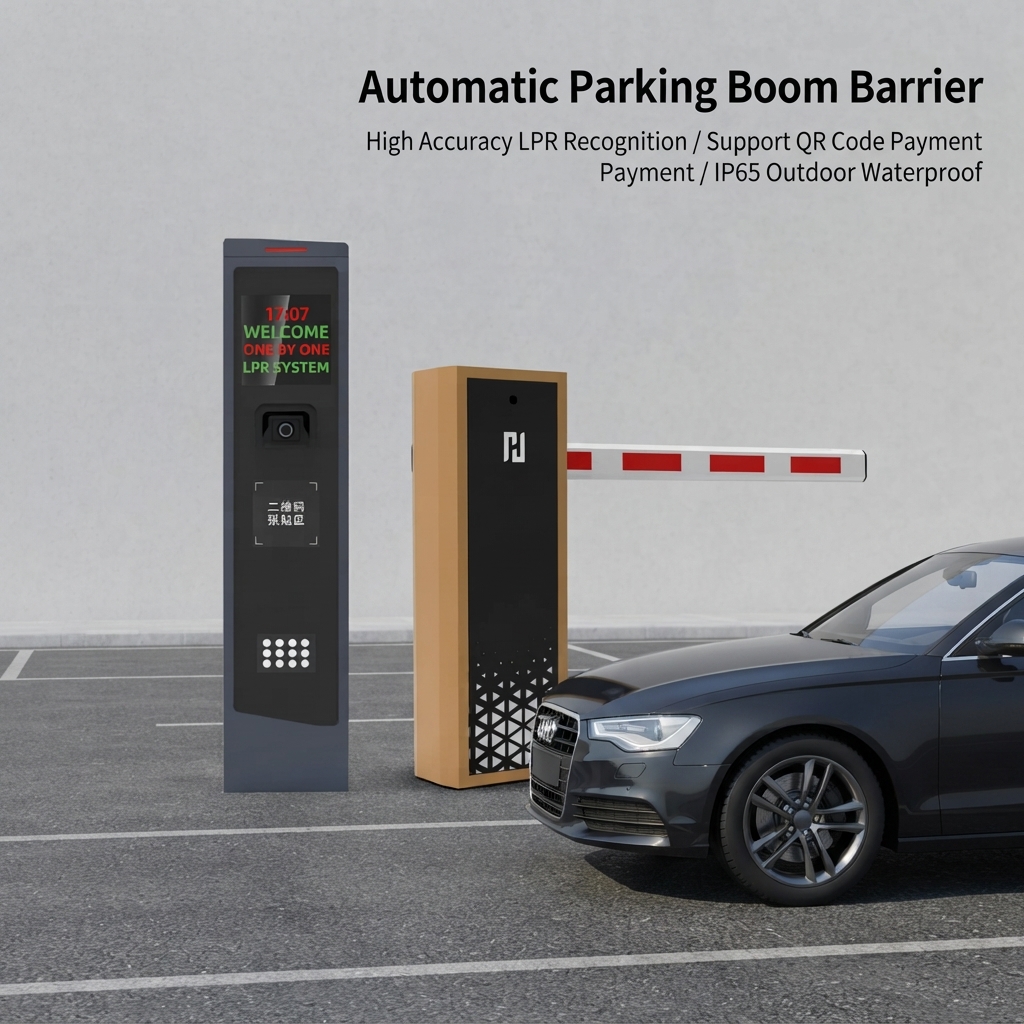
To increase recognition reliability, you should adjust the camera position, angle, and lighting, and check the legibility of the panels under site conditions, including shadows, reflections, and nighttime. A clear mechanism must also be provided to deal with illegible plates or unregistered vehicles, such as checking with the guard from a side point instead of stopping the main queue.
3. Use RFID or long-range UHF technology for continuously registered vehicles
In apartment complexes, offices and fixed fleets, long-range RFID tags or UHF tags can reduce the time a driver spends searching for a tag, lowering a window, or communicating with employees. After reading valid credentials, the system controls the barrier according to the specified rules. The reading distance and stability depend on the reader, tag, installation location, vehicle speed, and site interference; Therefore, the supplier should confirm performance according to the project conditions.
RFID technology does not mean allowing all vehicles to pass unconditionally. Regularly update the list of authorized vehicles, stop missing credentials, and establish alternative procedures for visitors, temporary vehicles, and credential failures. In sites that receive many visitors, an automated route can be allocated for registered vehicles and a separate verification route for visitors so that one group does not disrupt the movement of the other.
4. Choose the barrier speed and model according to the actual traffic volume
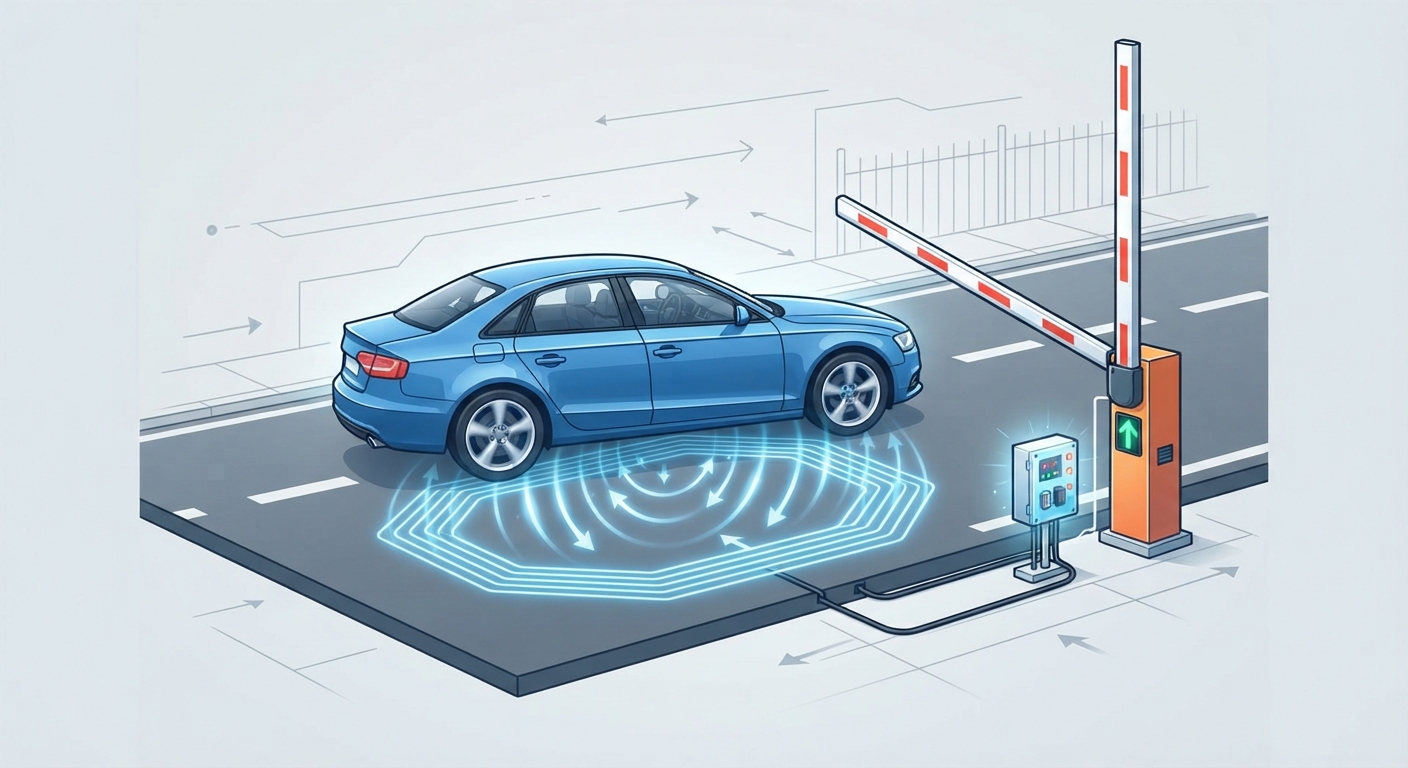
High-speed barriers or designed for frequent operation at busy entrances can be evaluated, but should not be chosen based on stated boom time alone. Boom length, vehicle type, operating cycles per hour, controller response, recognition system delay, installation conditions and safety procedures must also be considered. Long lever or inappropriate model may affect opening and closing time and operating load; The criteria are therefore based on the data sheet of the specific model and field tests.
Also evaluate the device's suitability for Qatar's outdoor environments. High heat, dust, strong sunlight and coastal conditions can affect protection, maintenance and long-term performance. Before purchasing, confirm the scope of the operating environment, degree of protection, maintenance intervals, availability of spare parts and warranty conditions. Do not generalize the specifications of one model to the entire product series.
5. Prepare vehicle detection and safety sensors
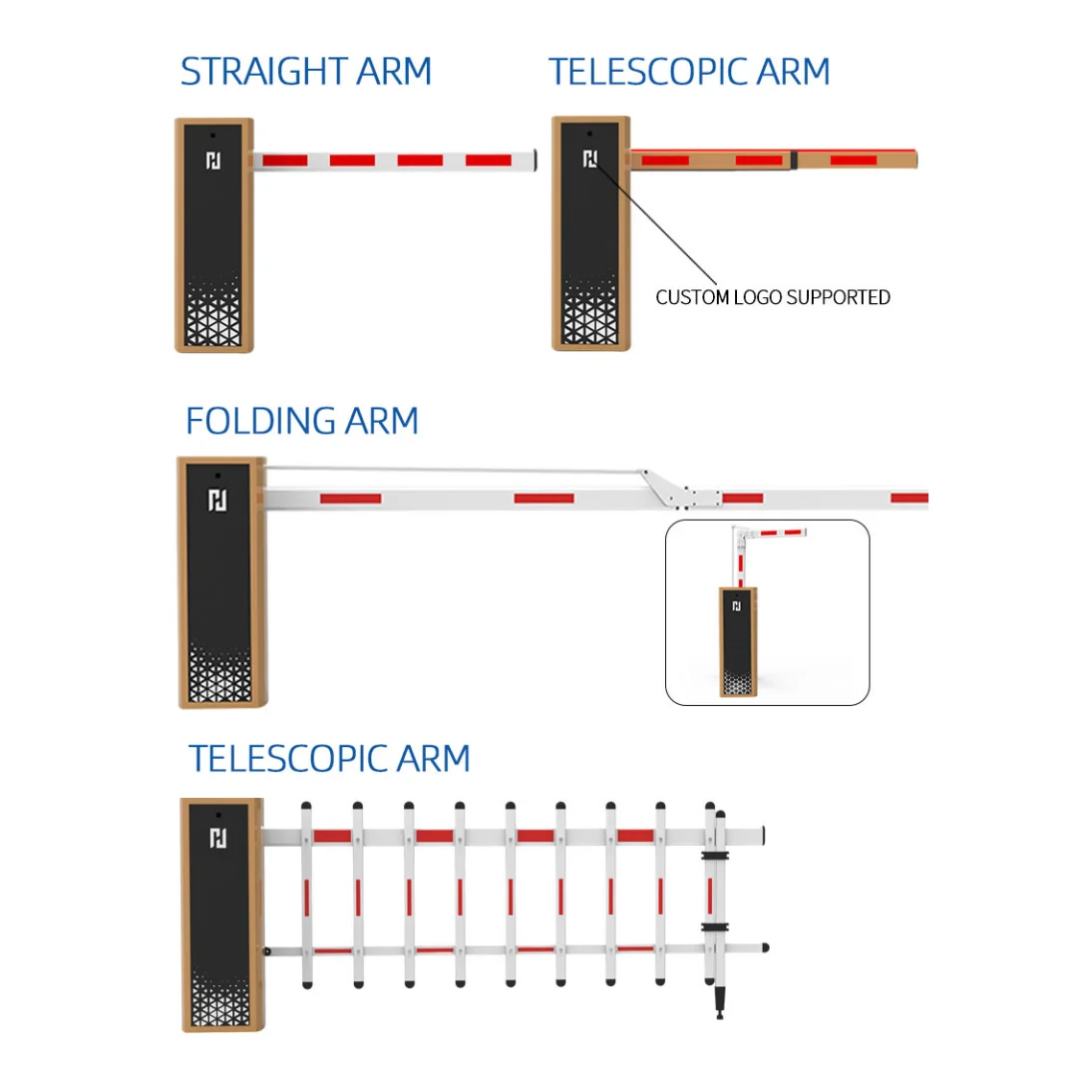
Vehicle detection helps the system determine when a vehicle has arrived, whether it is still below the barrier arm, and when it can be closed. Depending on the site design, ground detection loops, radar sensors or other compatible detectors can be evaluated, ensuring their correct association with the barrier control logic. A qualified installer must determine device positions and settings based on lane width, vehicle speed, and site conditions.
Queues should not be reduced at the expense of safety. Appropriate protective functions must be maintained, such as preventing the arm from closing on the vehicle and detecting its presence, and testing for successive traffic situations of vehicles, motorcycles and large vehicles. Safety delays, shutdown protections or necessary human intervention procedures should not be canceled simply because the queue is shortened.
6. Link payment, tickets and parking management software
If the entrance still relies on manual toll collection, manual registration, or paper tickets, updating the barrier alone may not significantly improve traffic flow. Commercial parking lots can evaluate linking the barrier to parking management software, automated payment, ticketing system, or plate recognition, so that the system allows passage after payment or permit is confirmed and keeps entry and exit records for operators to review.
Before purchasing, check communication interfaces and protocols are compatible with existing software, such as relay dry contacts, RS485, Wiegand, or TCP/IP; The specific console and system version must be consulted to confirm actual support. Specify in the contract or technical plan responsibilities for integration, testing scope, fault handling, and data permissions, to avoid discovering connectivity issues after the equipment arrives.
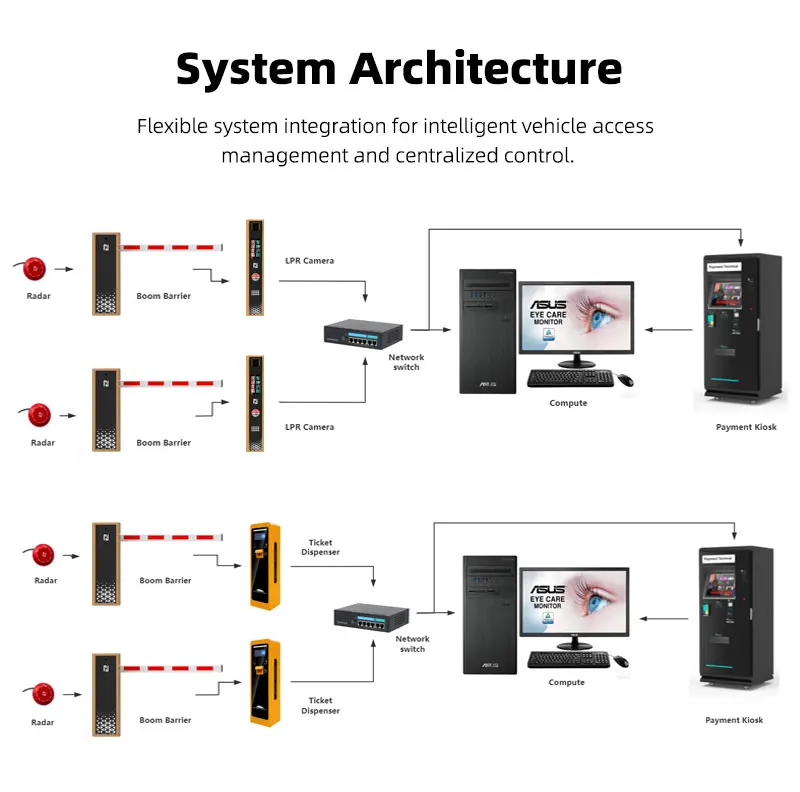
7. Improved route planning and exceptional vehicle handling
Allocate sufficient parking space at the entrance so that queues of vehicles do not obstruct the public road, pedestrian or emergency paths, or adjacent entrances. Determine the stop line, recognition area, arm location and vehicle exit path, and check the turning radius of large vehicles and the clear height of underground parking. When space is limited, a folding boom barrier can be evaluated, checking site dimensions and manufacturer's requirements.
Diverting exceptional vehicles away from the main queue is often more effective than increasing machine speed alone. A side checkpoint can be created to handle visitor registration, recognition failures, payment issues and unauthorized vehicles. Staff should have clear operating steps to handle breakdowns or temporary traffic requests without endangering pedestrians or vehicles.
8. Configure the entrance according to the type of vehicles and context of use
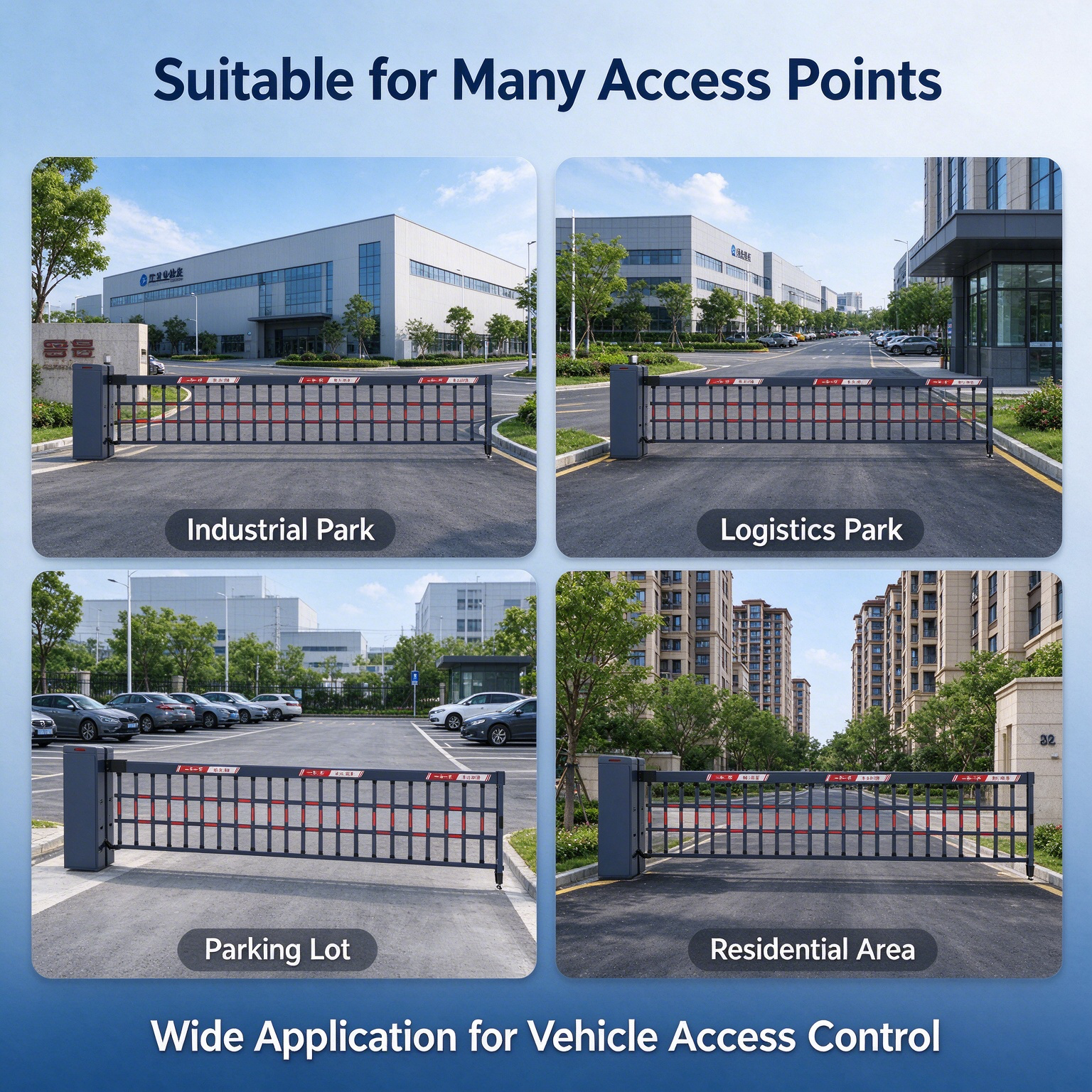
- Residential complexes and apartments: ANPR/LPR or RFID can be used for automated verification of residents' vehicles, with pre-registration or manual verification reserved for visitors.
- Offices and commercial parking: Plate recognition can be linked to payment systems and parking management software to reduce card issuance and manual collection.
- Logistics areas and warehouses: Truck recognition, high operating rate, vehicle detection and maintenance plan should be taken into account during continuous operation.
- Hotels, hospitals and public facilities: Establish priority procedures for visitors, taxis, emergency vehicles and services, and avoid the impact of queues at the main entrance.
- Underground Parking: Check clear height, circulation space, lighting and barrier arm type to ensure equipment is suitable for building conditions.
9. Continuously reduce waiting time through maintenance and data
Regularly check the balance of the arm, stabilizers, controller, card reader, camera lens, sensors, wires and connection status. Dust, loose parts, changed settings, or network lag may result in repeated recognition, incorrect operation, or the need for manual intervention. Determine maintenance frequency according to intensity of use, environment and manufacturer's instructions, and keep a record of faults.
Track weekly or monthly the average traffic time, longest wait time, recognition success rate, number of manual permits, number of equipment failures, and rush hour traffic volume. Compare the data before and after each modification to ensure that the improvement is the result of improving the process, not moving the wait elsewhere. On complex projects, have the supplier inspect the site and perform peak testing before determining the final configuration.
10. Practical pre-purchase checklist
- Record the peak vehicle traffic volume and the current average waiting time at the entrance.
- Determine the lane width, arm length, vehicle types, and expected traffic volume per hour.
- Compare the convenience of ANPR/LPR, RFID, QR codes, tickets and manual verification procedures.
- Confirm the operating cycle rate, opening and closing speed, and environment range for the selected barrier, and request data for the selected model.
- Verify that radar, ground loops, or other vehicle detectors are compatible with the control unit.
- Plan a side action to handle exceptional vehicles so that the main route's traffic is not interrupted by a single vehicle.
- Check the compatibility of payment systems, parking software, access control platforms and communication interfaces.
- Conduct field acceptance tests including peak simulation, failure recognition, health checks, and network outage handling.
- Confirm the maintenance plan, availability of spare parts, scope of warranty, and method of technical support.
- Reevaluate queue length and average traffic time based on test run data.
Frequently asked questions
What is the quickest way to reduce the queues of cars at the parking entrance?
There is no one method that fits all sites. Optimization often begins by identifying the cause of the delay, then automating verification of registered vehicles using ANPR/LPR or RFID, reviewing barrier speed and route planning, while providing a bypass for exceptional cases.
Is it enough to install a high-speed boom barrier?
Not necessarily. If the delay is caused by manual payment, visitor registration, or poor reading of signs, the line may remain even with a faster barrier. The entire system must be evaluated from the moment the vehicle arrives until the moment it is allowed to pass.
Can ANPR and RFID be combined?
Some access systems can be designed to support more than one verification method, but you must ensure that the cameras, readers, controller and parking management software are compatible. One method can be allocated for registered vehicles and another method for visitors according to the site’s policy.
How do I choose a parking barrier suitable for Qatar?
Start with track width, traffic intensity, boom length, installation environment, and expected number of operating cycles. Request specific model data, confirm environmental protection, maintenance, warranty and technical support, then test the system on site before final certification.
What data should be monitored after installation?
Monitor average traffic time, longest queue, recognition success rate, number of manual intervention times, and crashes during peak hours. These indicators help determine whether modifications have actually improved flow.
Conclusion
Reducing queues of vehicles at parking entrances requires addressing the real cause of congestion, not just purchasing a faster device. Combine proper route planning, automated verification via ANPR/LPR or RFID when needed, barriers appropriate to traffic volume, vehicle sensors, software integration, and data-driven maintenance. For locations in Qatar, specifications, compatibility and environmental conditions for each model should be confirmed with the Qatar Boombarrier team before making a purchase decision.
Call to Action: Share your location traffic data, entrance measurements and vehicle type with the Qatar Boombarrier team to request a technical recommendation for a suitable configuration that reduces waiting without compromising safety.
For more details on the associated products and systems, see Vehicle Access Control Solutions.
Latest News
What Is the Best Parking Barrier for a Small Car Park?
How to choose a parking barrier for a small car park in Qatar, comparing arm length, duty cycle, RFID, ANPR/LPR, safety sensors and installation cost.
2026-10-29
How to Choose the Right Automatic Parking Barrier for Your Site
A practical guide to choosing the right automatic parking barrier in Qatar, covering arm length, operating speed, traffic density, RFID and ANPR systems, safety sensors and install...
2026-10-29
How to Choose a Parking Barrier for an Underground Car Park
A guide to choosing a parking barrier for underground car parks in Qatar, covering ceiling clearance, arm type, traffic density, safety sensors and RFID or ANPR/LPR access control.
2026-10-29
How to Compare Parking Barrier Manufacturers and Suppliers
A practical guide to comparing parking barrier manufacturers and suppliers in Qatar, covering product quality, RFID and ANPR compatibility, safety, warranty, support and total cost...
2026-10-29
What Should You Consider When Buying a Heavy-Duty Parking Barrier?
A buying guide for heavy-duty parking barriers in Qatar, covering duty cycles, arm length, motor type, dust and heat protection, safety sensors and RFID or ANPR/LPR integration.
2026-10-29
How Does an Automatic Parking Barrier System Work?
Discover how an automatic parking barrier system works in Qatar, from vehicle detection and RFID or ANPR/LPR verification to safe arm opening, closing and parking management integr...
2026-10-29
Qatar Boombarrier® | Leading Boom Barrier Manufacturer
Advanced Security Access Control and Intelligent Parking Solutions.
Company Strength
Adequate Inventory
Fast Shipping
Our Products
CONTACT US
Address: No. 2 Wanshou Road, International Innovation Industrial Park, Jinan, Shandong, China


© COPYRIGHT 2025 Qatar Boombarrier® | Leading Boom Barrier Manufacturer

Contact Us
Our passion is to bring your ideas to life. Work with our design team to create a one-of-a-kind custom finish or cladding system to create a truly unique space. Together we can make your story stand out. If you need something to request a sample, request pricing, or request a demo, please fill out the contact form below. Explain your request in as much detail as you can and a representative will contact you within 1 business day.