Qatar Boombarrier® | Leading Boom Barrier Manufacturer

What Is a Parking Barrier? Types, Uses, and How It Works
Release time:
2026-10-29
A parking barrier, also known as a vehicle boom barrier or automatic barrier gate, is a means of controlling the entry and exit of vehicles from private parking lots and entrances. It is used to regulate vehicle movement, limit unauthorized entry, support security measures and manage parking. In Qatar, it can be suitable for commercial tower parking lots, residential complexes, hotels, commercial centers, warehouses, and facility entrances.
1. What is a parking barrier?
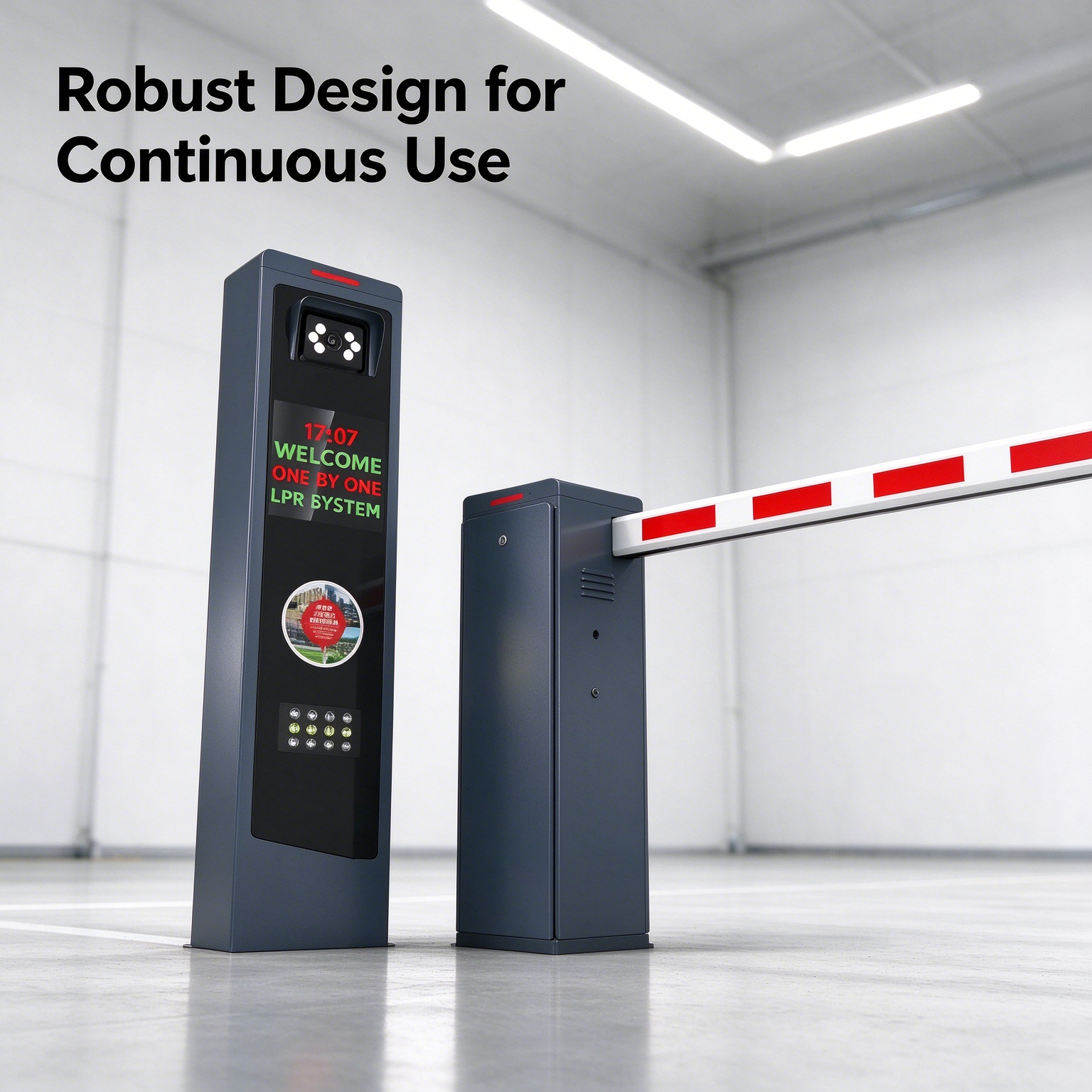
A parking barrier is a mechanical or electromechanical system that usually consists of an operating unit, a barrier arm, and a control unit, and may work with a card reader, a license plate camera, or a sensor to detect the presence of a vehicle. Upon receiving an entry permit signal, the system raises the arm for the vehicle to pass and then returns it to the closed position according to the control and safety settings.
It is important to distinguish between a boom barrier that regulates the passage of vehicles across the path, a parking lock that reserves an individual space, and pedestrian turnstiles that regulate the passage of people. These products may work together within one system, but they perform different functions.
2. The main types of parking barriers
A. Straight arm barrier
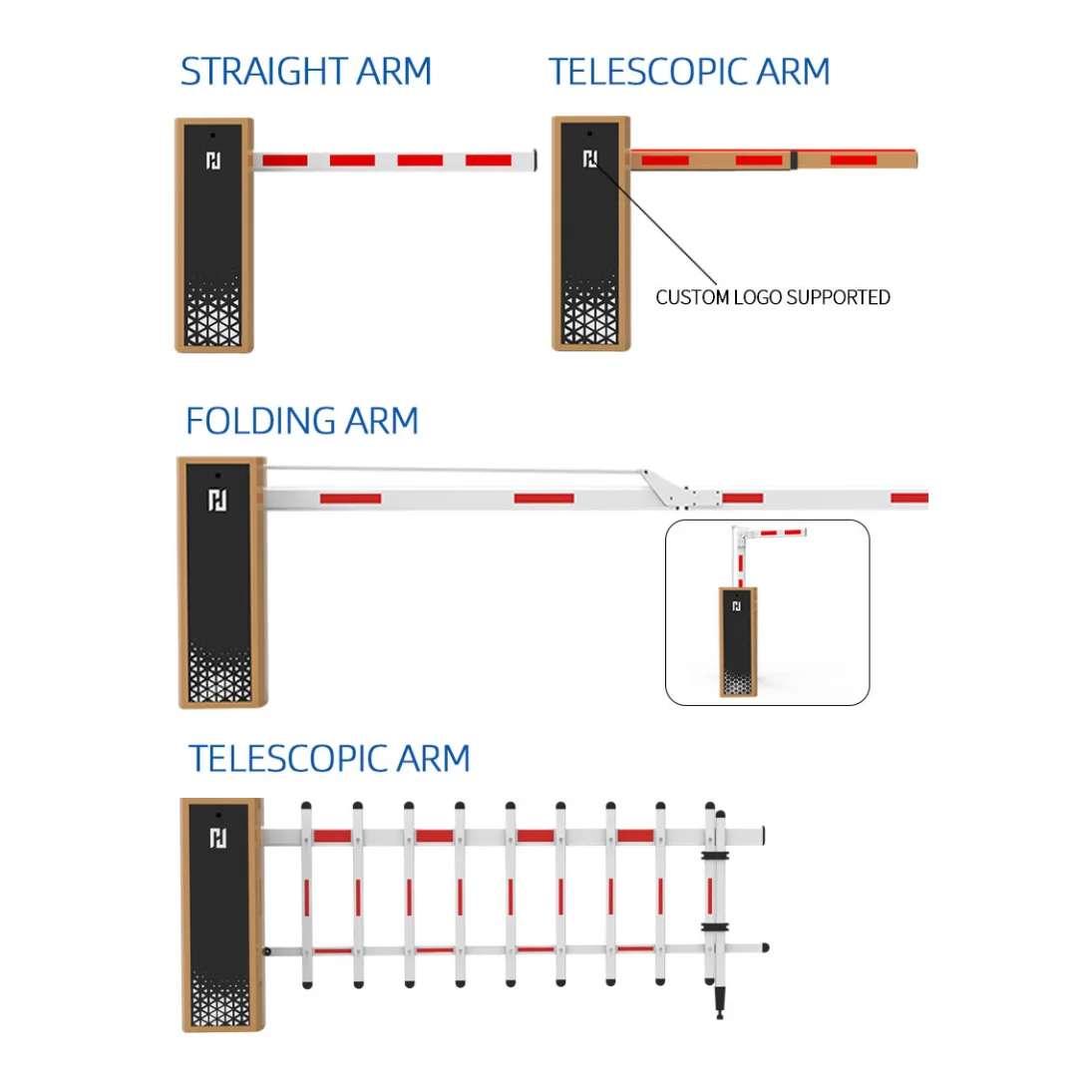
The straight arm is widely used in entrances to parking lots, commercial buildings and residential complexes. The arm length is chosen based on the track width, installation space, vehicle circulation path, and safety requirements. Available length, opening speed and duty cycle must be confirmed from the data sheet of the selected model.
for. Foldable arm barrier
The folding arm may be suitable for doorways where there are height restrictions, such as some covered parking lots or building entrances. Before choosing, you should measure the clear height and space the arm needs during movement, and ensure that the design is suitable for the location.
C. High speed barrier or for intensive use
In entrances with frequent traffic, such as office towers, transportation hubs, and commercial sites, opening and closing time, number of operating cycles, type of motor, and ease of maintenance should be evaluated. It is not enough to describe the barrier as “high-speed”; Rather, the actual model data must be compared with the expected traffic volume at peak times.
D. Integrated barrier with RFID or ANPR/LPR plate recognition
The vehicle barrier can be linked to an RFID reader for card recognition or an ANPR/LPR automatic license plate recognition method. When the system is configured correctly, the vehicle's validity can be verified before issuing the command to open the barrier, with entry and exit data recorded according to site policy and system settings.
3. How does a parking barrier work?
The process begins when the vehicle approaches the entry point. The system detects its presence via a ground detection loop, radar, or compatible sensor, if within the selected configuration. Permission is then verified via an RFID card, a list of approved vehicles, a plate reading, or a ticketing/payment system, depending on the project’s equipment.
After successful verification, the control unit sends a signal to the barrier operator to raise the boom. The driver crosses after ensuring that the path is clear. Safety sensors or vehicle presence detectors, when properly installed and configured, then help prevent the arm from descending on a vehicle still within the danger zone. After leaving the vehicle, the lever returns to the closed position according to the approved operating logic.
Safety features vary between models, so the installation and control manual should be reviewed, appropriate detection methods selected, and field tested. The boom barrier should not be relied upon alone to prevent accidents or considered a substitute for on-site supervision and safety procedures.
4. Where are parking barriers used in Qatar?
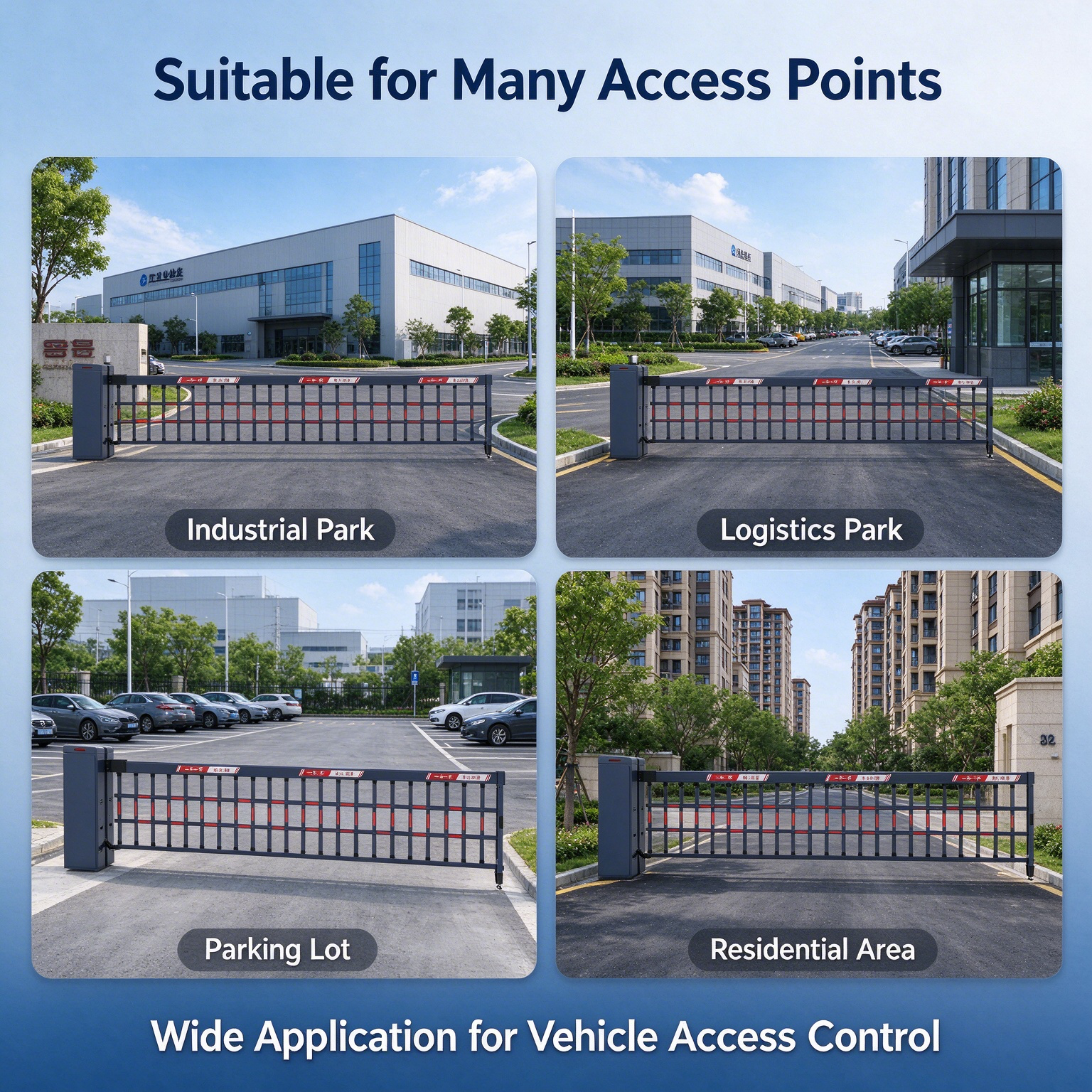
- Commercial towers and buildings: organizing the entry of employees and visitors and linking access permissions to the building management.
- Residential complexes: managing residents’ and visitors’ vehicles and recording entry and exit operations.
- Hotels and commercial centers: Supporting traffic regulation at peak times and linking entry to tickets or payment when needed.
- Warehouses and logistics areas: organizing the entry of trucks and fleet vehicles, selecting equipment appropriate to the intensity of use and the environment.
- Multi-use facilities: combining vehicle barrier, pedestrian access control and parking locks when needed.
Site conditions vary in Qatar; Therefore, the temperature, dust, sun exposure, humidity and wind at the installation site must be evaluated, and the environmental protection rating and maintenance requirements stated in the data sheet must be reviewed. Do not assume that every model is automatically suitable for outdoor installation or continuous operation.
5. How to choose the right barrier?
Before purchasing a parking barrier, determine the following requirements:
- Track Width and Boom Length: Measure the width of the doorway and the space available for boom movement, and ensure the configuration fits the track.
- Traffic volume: High-traffic entryways may need a model designed for higher duty cycles; See actual duty cycle specifications.
- Operating speed: Compare opening and closing times with the expected vehicle flow, and do not rely on a marketing description alone.
- Vehicle verification method: Choose between manual control, RFID, plate recognition, or ticketing and payment system depending on the site policy.
- Safety and Detection: Determine the need for a detection loop, radar or compatible safety sensors, and ensure proper testing after installation.
- Integration: Check the communication interfaces supported by the model and existing software, such as relays, RS485, Wiegand, or TCP/IP, depending on the actual configuration.
- Environment and Maintenance: Review dust and weather protection, availability of spare parts, and ease of access for maintenance.
- Documentation and Support: Request datasheet, connection diagrams, installation guide, warranty terms, and technical support details before certifying the product.
6. Why do we connect the barrier to the parking management system?
When the boom barrier is integrated with a parking management system, vehicle verification, entry and exit records, visitor management, and payment or reporting tools can be standardized depending on the capabilities of the software. This architecture helps improve operational visibility and reduces reliance on manual procedures, but the outcome depends on design, configuration, network quality, and integration between hardware and software.
Prior to implementation, entry and exit scenarios, unknown vehicle handling mechanism, network or power outage, manual operation in emergency situations, and access permissions to vehicle records must be documented. You must also comply with the site's privacy requirements and policies.
7. Common mistakes to avoid
- Choose arm length before measuring track width and surrounding space.
- Buy a fast barrier without matching the duty cycle to the peak movement.
- Assume that the license plate recognition camera will perform accurately in all lighting conditions and shooting angles.
- Neglecting safety sensors or not testing them after installation.
- Failure to verify compatibility of communication interfaces with the current control system.
- Relying on generic specifications rather than the specific model data sheet.
8. Frequently asked questions
What is the difference between a parking barrier and an automated entry gate?
The term parking barrier is often used to describe an arm that opens and closes to regulate the passage of vehicles across a lane. As for the automatic entry gate, it may refer to other types such as the sliding or swing gate. The choice depends on the form, function and level of control required.
Can the parking barrier be linked to vehicle plate recognition?
Yes, if the barrier and ANPR/LPR system support the required integration. Camera, controller and software compatibility should be checked, and panel readings tested in actual site conditions prior to full commissioning.
Is the arm barrier suitable for commercial parking lots and residential complexes?
Both types can fit, but the model should be chosen based on traffic density, route width, vehicle verification method, safety features and surrounding environment.
What information should I send to get a quote?
Send entrance width or approximate width, number of entrances and exits, expected vehicle volume, control method required, need for ANPR/LPR or RFID, installation conditions, quantity, and integration requirements. These details help the supplier suggest a suitable configuration and prepare a more accurate offer.
Conclusion
The parking barrier is not just an arm blocking the road; Rather, it is part of the vehicle access management system. A good choice begins with understanding the location, volume of movement, and safety requirements, then determining the appropriate arm length, actuator, verification method, and integration interfaces. For projects in Qatar, model data, installation conditions and technical support should be reviewed before purchase, and the entire system should be tested after installation.
Are you planning to equip a parking entrance in Qatar? View the available boom barriers and parking gates, then prepare the route width, control requirements and expected number of vehicles to request a technical recommendation and a suitable quote.
Latest News
What Is the Best Parking Barrier for a Small Car Park?
How to choose a parking barrier for a small car park in Qatar, comparing arm length, duty cycle, RFID, ANPR/LPR, safety sensors and installation cost.
2026-10-29
How to Choose the Right Automatic Parking Barrier for Your Site
A practical guide to choosing the right automatic parking barrier in Qatar, covering arm length, operating speed, traffic density, RFID and ANPR systems, safety sensors and install...
2026-10-29
How to Choose a Parking Barrier for an Underground Car Park
A guide to choosing a parking barrier for underground car parks in Qatar, covering ceiling clearance, arm type, traffic density, safety sensors and RFID or ANPR/LPR access control.
2026-10-29
How to Compare Parking Barrier Manufacturers and Suppliers
A practical guide to comparing parking barrier manufacturers and suppliers in Qatar, covering product quality, RFID and ANPR compatibility, safety, warranty, support and total cost...
2026-10-29
What Should You Consider When Buying a Heavy-Duty Parking Barrier?
A buying guide for heavy-duty parking barriers in Qatar, covering duty cycles, arm length, motor type, dust and heat protection, safety sensors and RFID or ANPR/LPR integration.
2026-10-29
How Does an Automatic Parking Barrier System Work?
Discover how an automatic parking barrier system works in Qatar, from vehicle detection and RFID or ANPR/LPR verification to safe arm opening, closing and parking management integr...
2026-10-29
Qatar Boombarrier® | Leading Boom Barrier Manufacturer
Advanced Security Access Control and Intelligent Parking Solutions.
Company Strength
Adequate Inventory
Fast Shipping
Our Products
CONTACT US
Address: No. 2 Wanshou Road, International Innovation Industrial Park, Jinan, Shandong, China


© COPYRIGHT 2025 Qatar Boombarrier® | Leading Boom Barrier Manufacturer

Contact Us
Our passion is to bring your ideas to life. Work with our design team to create a one-of-a-kind custom finish or cladding system to create a truly unique space. Together we can make your story stand out. If you need something to request a sample, request pricing, or request a demo, please fill out the contact form below. Explain your request in as much detail as you can and a representative will contact you within 1 business day.