Qatar Boombarrier® | Leading Boom Barrier Manufacturer

How to Choose the Right Automatic Parking Barrier for Your Site
Release time:
2026-10-29
Choosing an automatic parking barrier does not depend only on price or speed of opening the arm. The appropriate solution must be compatible with the width of the entrance, the volume of vehicle traffic, the ceiling height, the method of verifying access, safety requirements, and operating and maintenance conditions. In Qatar, the needs of the entrance to a commercial tower in Doha may differ from the entrance to a residential complex in Lusail or a truck gate in a logistics area; So it's best to start by evaluating the site and then compare models based on actual specifications.
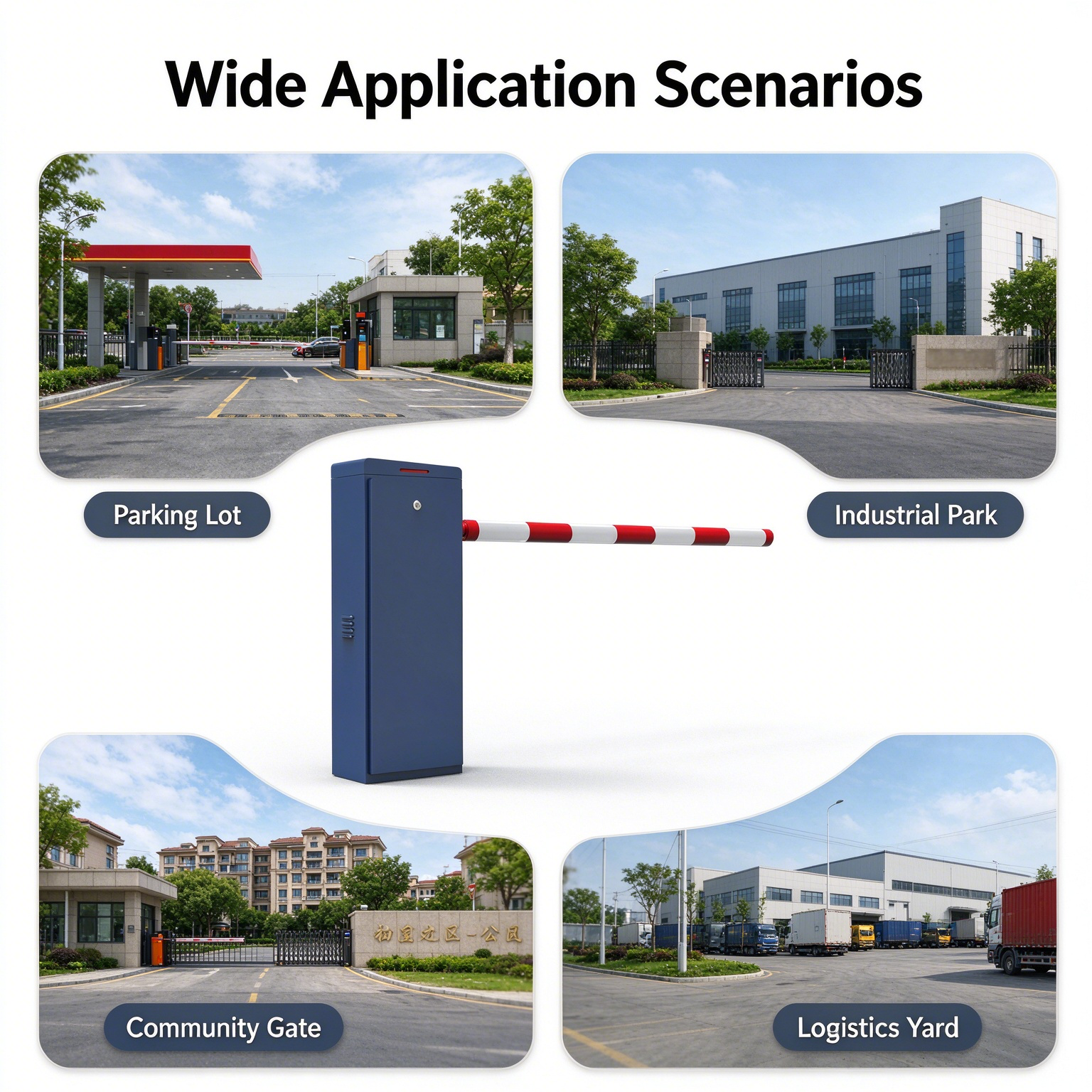
1. Start by determining the type of site and the function of the portal
Before choosing a model, determine whether the entrance serves a building's employee parking, an apartment complex, a hotel or mall, a warehouse or an industrial facility. Also ask if the barrier will be used at one entrance or multiple lanes, and whether the site needs to collect fees, register visitors or manage fleet access. This information helps determine the tolerance level and control system required.
- Residential parking: Priority may be given to ease of entry for residents and visitors, linking the barrier to RFID cards or identifying vehicle plates.
- Commercial buildings and malls: Peak traffic, length of queues and the need for payment or tickets should be estimated.
- Warehouses and industrial sites: Truck traffic, operating frequency, security procedures, dust and weather conditions must be evaluated.
2. Measure the track width and choose the appropriate arm length
The width of the track affects the length of the barrier arm and where the actuator is installed. Measure the actual distance between the two sides of the lane, taking into account curbs, curbs, crosswalks and vehicle turning space. Do not choose an arm that is too long without checking the manufacturer's recommendations; The arm length must comply with the mechanism design and support and safety requirements.
Boom barrier categories typically offer straight, folding or fence-style options, but availability and maximum length depend on model. If the doorway is very wide, dividing the movement into multiple paths may be more convenient than relying on one long lever; This must be decided by the project engineer after evaluating vehicle movement and site risks.
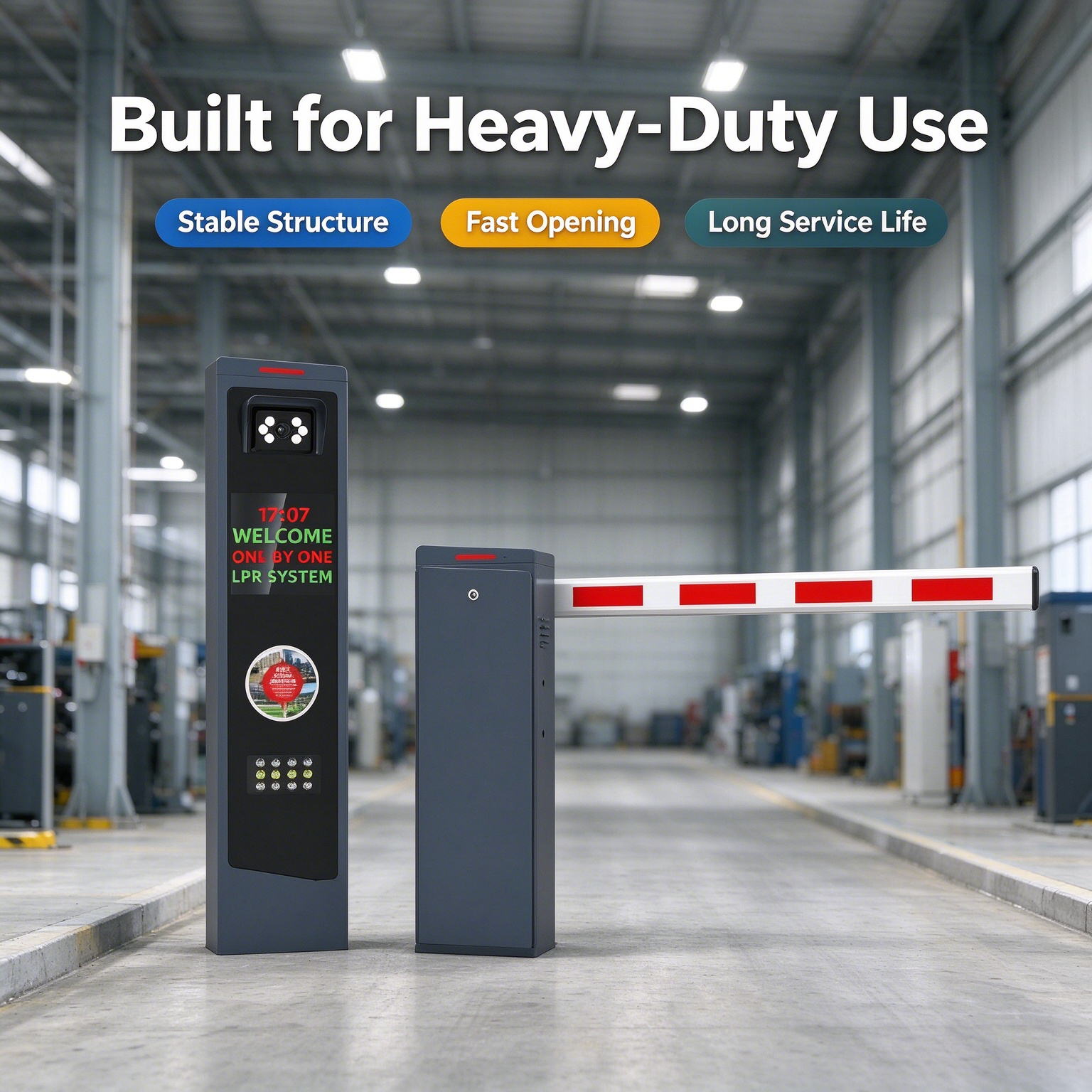
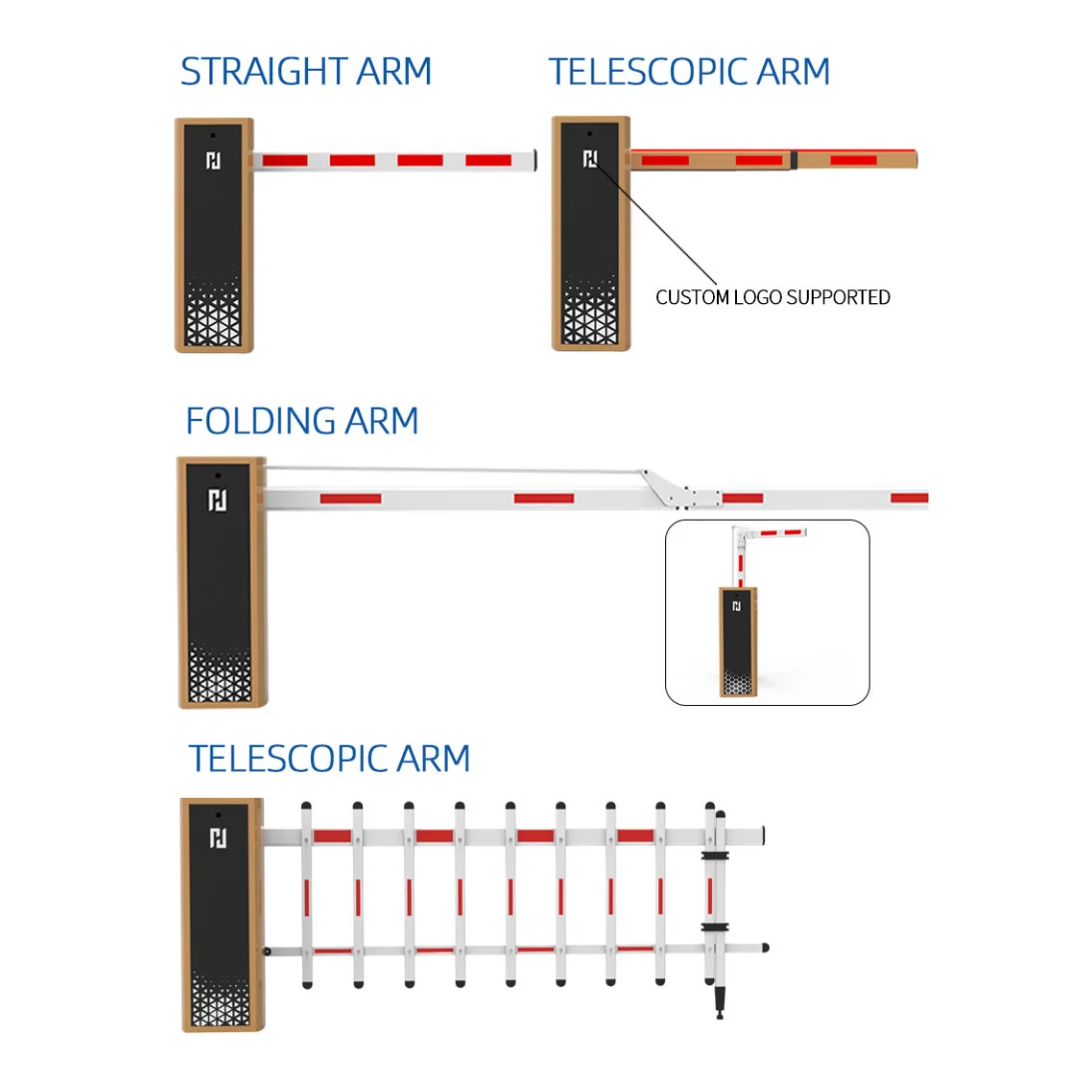
3. Choose the arm type according to height and space
Straight arm
The straight arm is used in many parking entrances when vertical and horizontal space is sufficient. It is a practical option for tracks with a clear layout, provided that the boom length matches the track width and model selected.
Foldable arm
If the barrier will be installed at the entrance to an underground parking lot or an area with a low ceiling, check the folding arm option. Measure the clear height carefully, and make sure that the arm will not hit the ceiling, signboards or ventilation and lighting equipment during opening.
Fence arm
A fence arm may suit locations that need a more visible visual barrier across the path, such as some artificial driveways or controlled locations. However, safety and movement space requirements should be evaluated, and this design should be ensured suitable for the flow of vehicles on site.
4. Match the operating speed with the traffic density
Faster opening speed doesn't necessarily mean it's better for every site. If the entrance experiences heavy traffic at specific hours, compare the opening and closing times, the number of operating cycles allowed, the downtime between cycles, and the cooling and protection mechanism according to the model data sheet. In a small, low-traffic situation, the priority may be reliability, ease of maintenance and overall cost rather than the highest speed available.
Calculate peak hour vehicle traffic instead of relying only on the daily average. If the site requires frequent operation, ask the supplier to confirm the appropriate duty cycle in writing, and review the suitability of the motor, controller and boom length for the proposed configuration.
5. Determine the vehicle verification method
The parking barrier can be operated with different means of control. The choice depends on the number of users, the level of security required, the project budget, and the way visitors are managed.
- Remote control or by security personnel: Suitable for some small entrances or locations that require a human decision before allowing entry.
- RFID cards: May be suitable for employees or permanent residents, with the validity of the cards managed and their cancellation when needed.
- ANPR/LPR Vehicle Plate Recognition: Can enable plate verification and link log records to the parking management system, provided the camera and software are set and tested under site conditions.
- Tickets or automatic payment: It may be suitable for paid parking spaces that need to link entry and exit to the toll system.
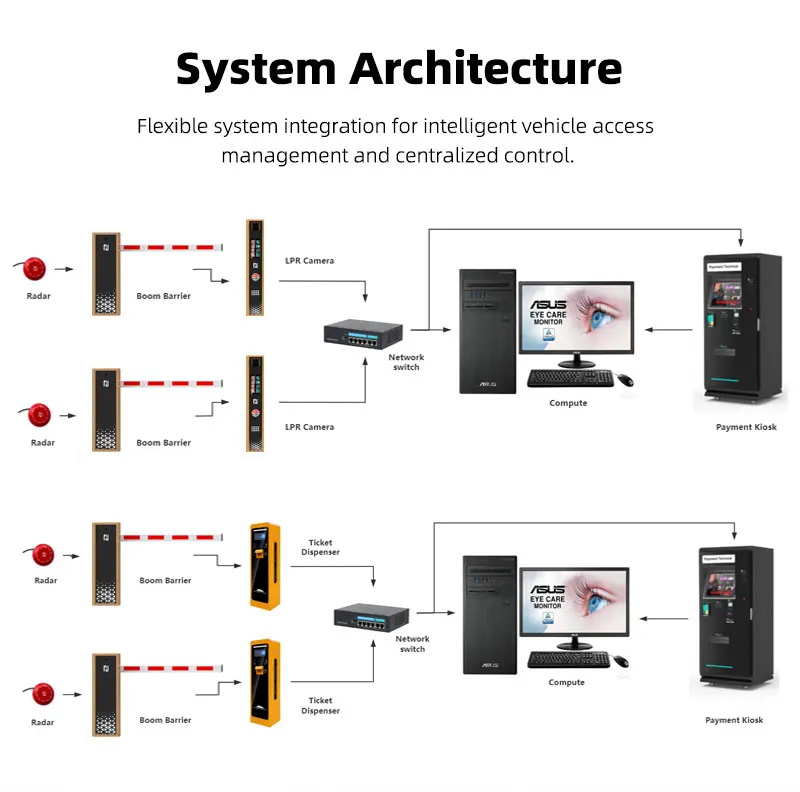
6. Do not neglect safety sensors
The need for a ground loop detector, radar, or compatible sensors to detect the presence of the vehicle and prevent arm movement in unsafe conditions should be evaluated. Protection functions vary from one model to another, and also depend on the type of sensor, connection method and programming. Therefore, components must be identified within the system diagram and tested after installation.
Ask for clarification on response to a power or network outage, the possibility of manual lifting in emergency situations, and how to handle a vehicle that remains under the arm. No feature is automatically available unless stated in the documentation for the model in question.
7. Check compatibility with the parking management system
If the site uses parking management software or an access control system, check the communication interfaces that the barrier and controller support. Options for some systems may include relay, RS485, Wiegand or TCP/IP inputs/outputs, but it is necessary to confirm the interface available on the selected model and its compatibility with existing hardware and software.
Before purchasing, prepare a diagram showing the cameras, RFID readers, sensors, controller, network, and payment system, if any. Ask the supplier for written confirmation of the integration points required, responsibility for preparing the software, and the tests that will be conducted prior to delivery.
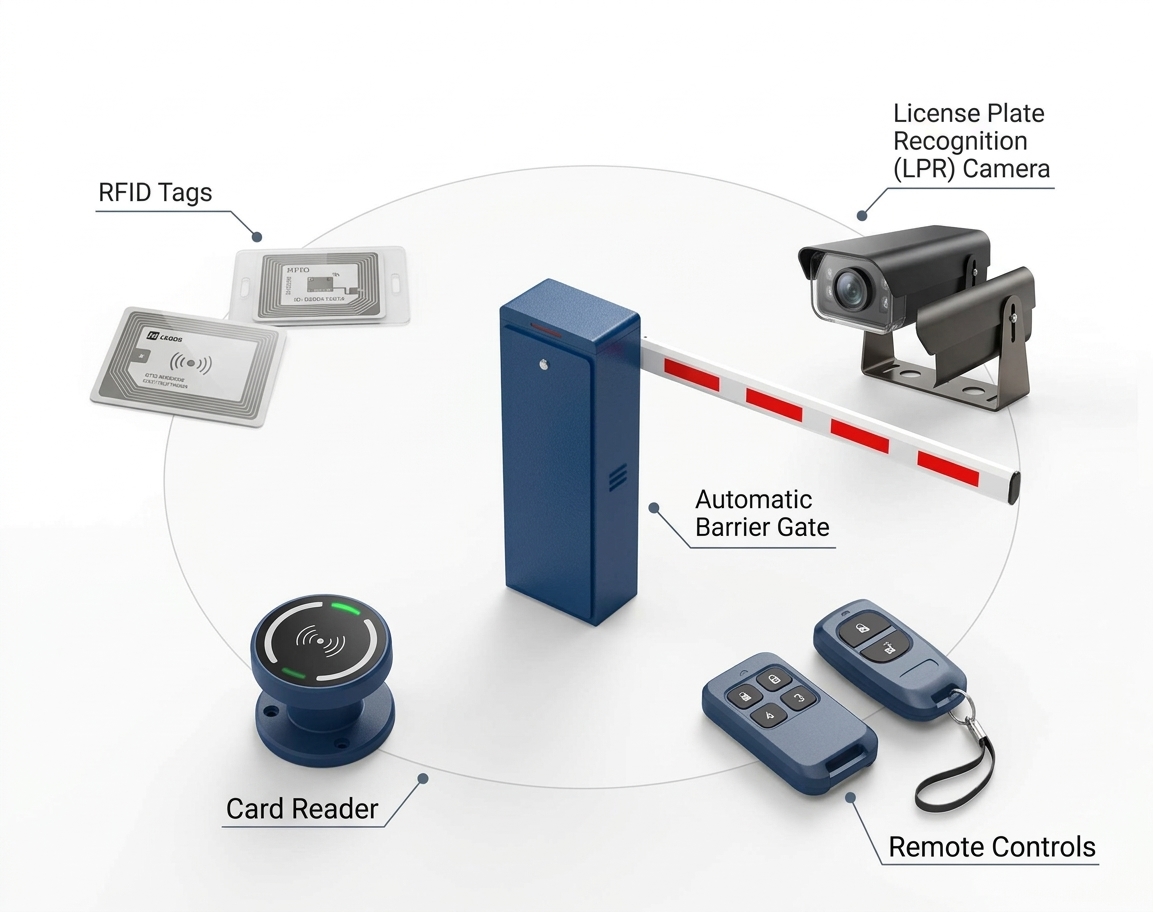
8. Evaluate the suitability of the barrier to the Qatar environment
Equipment in Qatar may be exposed to high temperatures, sunlight, dust and humidity, and conditions vary between an indoor parking lot and an outdoor corridor or coastal area. See operating temperature range, IP protection rating, body and coating materials, and cleaning and maintenance needs in the product documentation. A general description such as “weather-resistant” is not sufficient without documented specifications.
If the location is close to the coast or in a dusty area, ask the supplier for a written recommendation regarding the appropriate level of protection, maintenance schedule, and available replacement parts. The environmental rating should be chosen based on the model specifications and actual site hazards.
9. Calculate the total cost, not just the purchase price
Potential project cost includes barrier, arm, controller, sensors, card reader or license plate recognition camera, base work, cabling, installation, programming, integration, training and maintenance. Choosing the wrong model may result in increased downtime or modification costs later, even if its initial price is lower.
Request a detailed quote stating model, accessories, quantities, installation work, exclusions, warranty, lead time, availability of spare parts and after-sales support. Compare offers based on a similar scope of supply, not the total price alone.
10. Checklist before model approval
Before placing a purchase order, use the following list to reduce the possibility of choosing a system that does not fit the site:
- Measure track width, clear height, and space available for arm movement.
- Estimating vehicle movement during peak hours and required operating cycles.
- Determine the straight, foldable or fence arm according to the site design.
- Choice of verification method: manual control, RFID, ANPR/LPR, or tickets/payment.
- Identify the required sensors and means of protection and verify the method of testing them.
- Confirm communication interfaces and compatibility with current software.
- Review operating temperature, IP rating and maintenance requirements.
- Get model data sheet, connection diagram and installation guide.
- Warranty documentation, spare parts, training and technical support.
- Defining acceptance tests before delivery, including failure and safety scenarios.
Frequently asked questions
What is the best parking barrier for residential complexes in Qatar?
There is no single model that is best for all complexes. The number of residents, vehicles and visitors, entrance width, peak hours, need for RFID or ANPR/LPR, and safety and environmental requirements should be considered. After collecting this data, the appropriate models can be compared according to the data sheet.
Do I always choose a high-speed barrier?
Not necessarily. A high-speed barrier may benefit entrances with heavy traffic, but the speed must match boom length, safety requirements, and duty cycle. In low-traffic locations, a simpler, easier-to-maintain model may be more convenient.
Can the barrier be linked to a license plate reader camera or RFID reader?
This is possible when the barrier, controller and management system support the required integration interfaces. Compatibility between components and performance testing under site conditions must be verified before final approval.
What data should be sent to the supplier to request a recommendation?
Send a proposal or photos of the location, track width and ceiling height, number of tracks, expected vehicle movement, required verification method, presence of an existing parking management system, and installation conditions. This data helps suggest a suitable configuration and select the necessary accessories.
Conclusion
The best way to choose an automated parking barrier is to start with site requirements, then match boom length, type and operating speed to traffic volume and available space. Next, choose the appropriate control method, determine safety and integration methods, and review environmental conditions, total cost, and technical support. For Qatar projects, the required specifications and tests should be documented prior to purchase and any unconfirmed feature should not be approved in the model data sheet.
Share the entrance width, path width, expected traffic volume, and required control method with the Qatar Boom Barrier team to request a technical recommendation and quote that matches your project requirements.
For more details on related products and systems, see Boom Barriers and Parking Gates.
Latest News
What Is the Best Parking Barrier for a Small Car Park?
How to choose a parking barrier for a small car park in Qatar, comparing arm length, duty cycle, RFID, ANPR/LPR, safety sensors and installation cost.
2026-10-29
How to Choose the Right Automatic Parking Barrier for Your Site
A practical guide to choosing the right automatic parking barrier in Qatar, covering arm length, operating speed, traffic density, RFID and ANPR systems, safety sensors and install...
2026-10-29
How to Choose a Parking Barrier for an Underground Car Park
A guide to choosing a parking barrier for underground car parks in Qatar, covering ceiling clearance, arm type, traffic density, safety sensors and RFID or ANPR/LPR access control.
2026-10-29
How to Compare Parking Barrier Manufacturers and Suppliers
A practical guide to comparing parking barrier manufacturers and suppliers in Qatar, covering product quality, RFID and ANPR compatibility, safety, warranty, support and total cost...
2026-10-29
What Should You Consider When Buying a Heavy-Duty Parking Barrier?
A buying guide for heavy-duty parking barriers in Qatar, covering duty cycles, arm length, motor type, dust and heat protection, safety sensors and RFID or ANPR/LPR integration.
2026-10-29
How Does an Automatic Parking Barrier System Work?
Discover how an automatic parking barrier system works in Qatar, from vehicle detection and RFID or ANPR/LPR verification to safe arm opening, closing and parking management integr...
2026-10-29
Qatar Boombarrier® | Leading Boom Barrier Manufacturer
Advanced Security Access Control and Intelligent Parking Solutions.
Company Strength
Adequate Inventory
Fast Shipping
Our Products
CONTACT US
Address: No. 2 Wanshou Road, International Innovation Industrial Park, Jinan, Shandong, China


© COPYRIGHT 2025 Qatar Boombarrier® | Leading Boom Barrier Manufacturer

Contact Us
Our passion is to bring your ideas to life. Work with our design team to create a one-of-a-kind custom finish or cladding system to create a truly unique space. Together we can make your story stand out. If you need something to request a sample, request pricing, or request a demo, please fill out the contact form below. Explain your request in as much detail as you can and a representative will contact you within 1 business day.