Qatar Boombarrier® | Leading Boom Barrier Manufacturer

How to Compare Parking Barrier Manufacturers and Suppliers
Release time:
2026-10-29
The choice of parking barrier manufacturer or supplier impacts entrance reliability, vehicle and pedestrian safety, operational continuity, and long-term maintenance cost. It is not enough for the bid to be low or for the barrier to look appropriate in the photos; Rather, the product, technical configuration, and service that the site will receive after installation should be evaluated.
In Qatar, parking barriers may be used at the entrances to residential towers, commercial complexes, offices, hotels, warehouses, industrial facilities and visitor parking. Requirements vary from site to site; A residential entrance may need to manage residents’ cards, while a commercial parking lot may need to deal with visitors and register plate numbers, and an industrial site may require an arm suitable for frequent vehicle movement or a wide entrance.
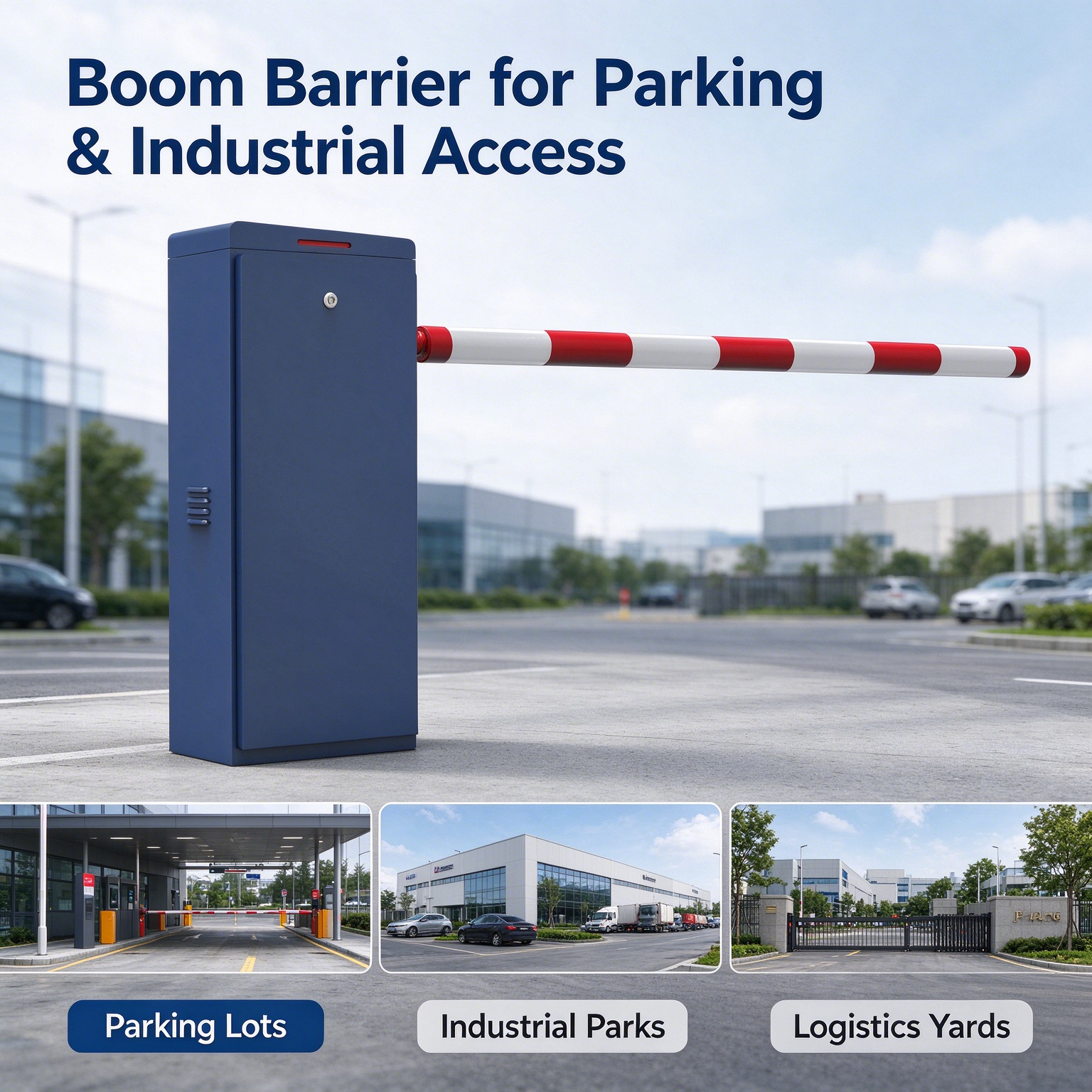
This guide helps project owners, facility managers, procurement teams, and system integrators establish practical benchmarks for comparison. It also reviews the product categories offered by the Qatar Boombarrier website, such as robotic arm barriers, RFID systems, ANPR/LPR, and radar sensors, specifying what should be checked before purchasing. The supplier's official documentation must be consulted to confirm models, technical parameters and compatibility.
1. Determine your site requirements before comparing prices
Before contacting suppliers, record the installation location and conditions of use. Determine at a minimum the width of the entrance, the daily number and types of vehicles, peak hours, hours of operation, the percentage of visitors, the need to record entry and exit movements, and whether the system will connect to an existing parking management or access control platform.
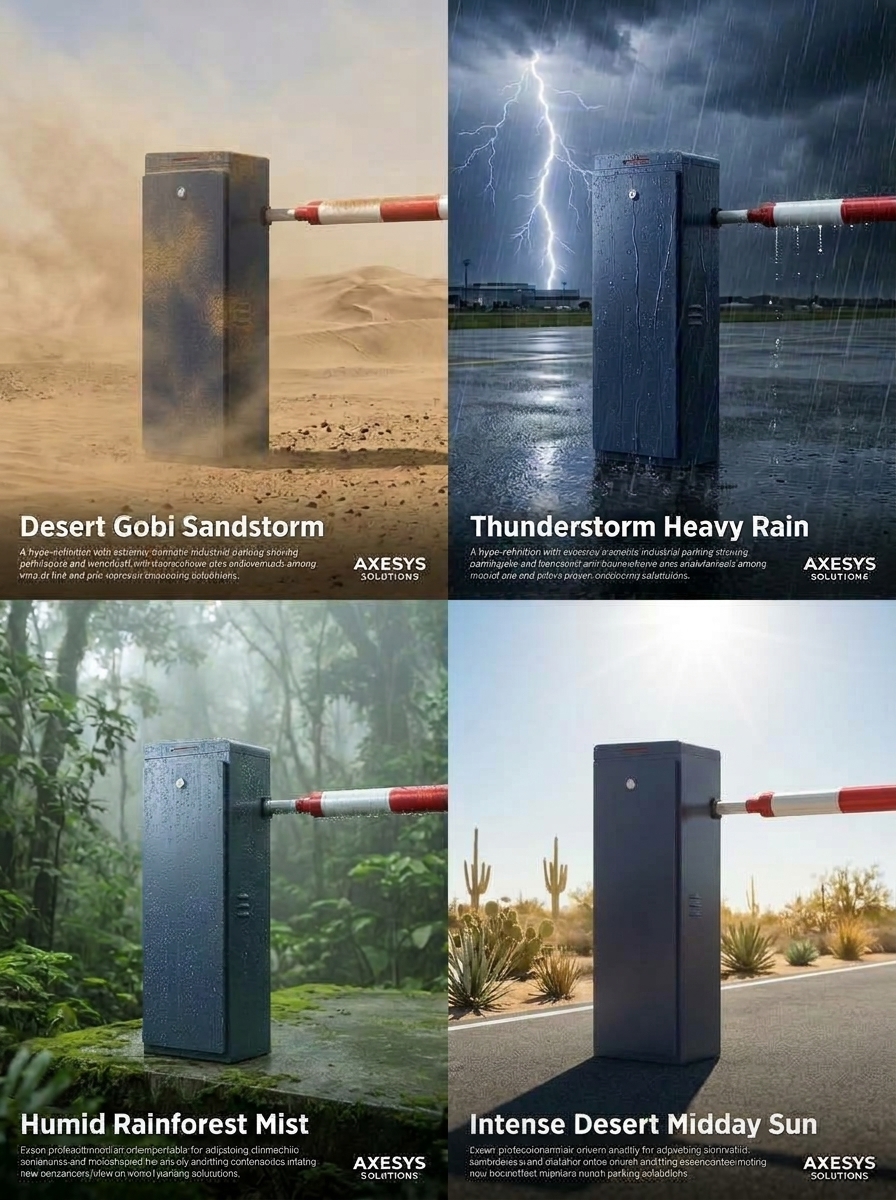
Also check the power supply, network connection, base area, drainage and shading, and possible impact of queues of vehicles on the road or emergency lanes. Some outdoor locations in Qatar may be exposed to high temperatures, direct sunlight, dust or sand; Therefore ask the supplier to confirm the scope of the operating environment, degree of protection and maintenance requirements, and do not rely on the description “for outdoor use” alone.
Gather the requirements into a concise specification sheet and send it to all nominated suppliers. Standardization of requirements helps to compare offers for the same configuration, and prevents scope differences; One offer may include the control unit, sensors and mounting, while another offer is limited to the bulkhead unit only.
2. Verify the supplier’s understanding of the product and its applications
A qualified supplier should explain the appropriate uses for different types of barriers, not recommend the same model for each entrance. Ask him how he chooses the device according to the traffic rate, arm length, installation space, type of vehicle, and control method, and ask him to explain the basis of the choice.
When comparing, check if the supplier can provide solutions from the following categories:
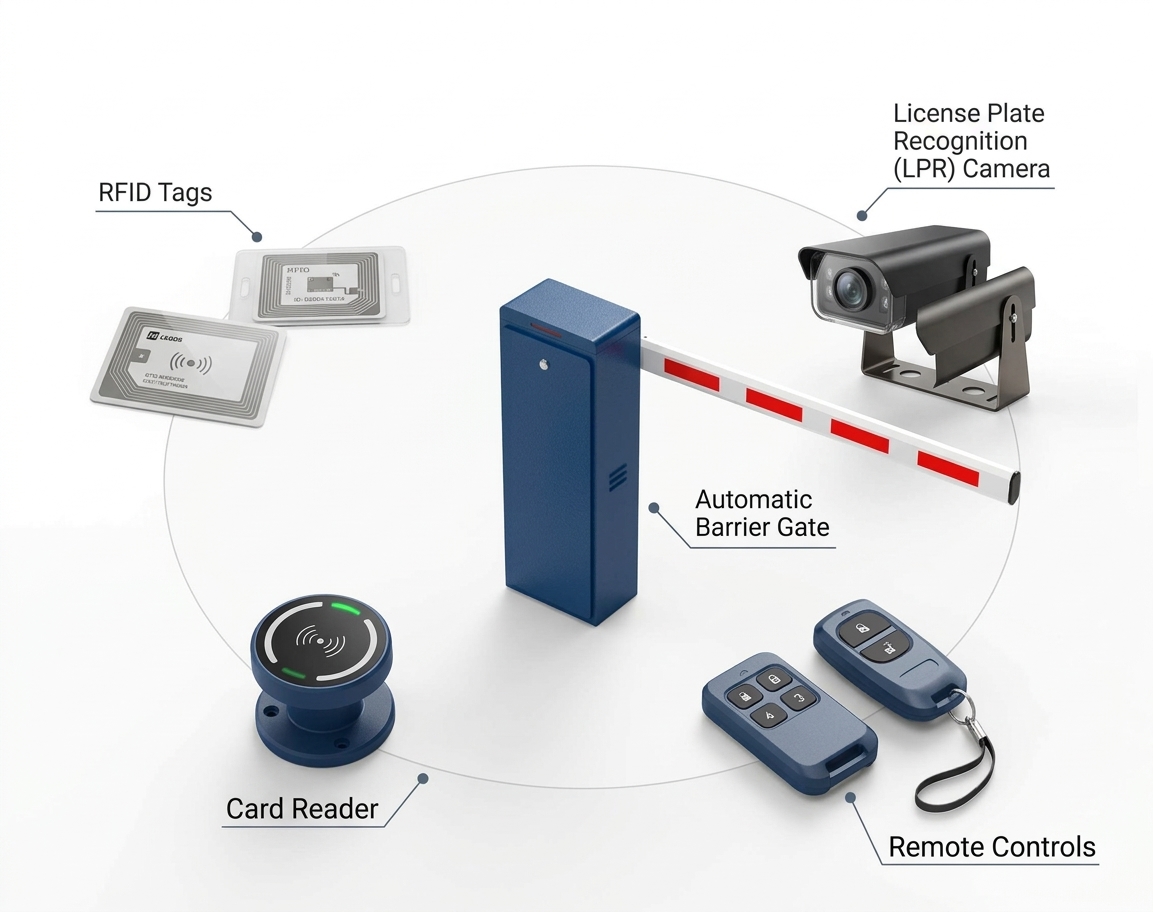
- Automatic arm barriers: They are usually used at the entrances to parking lots and residential and commercial complexes. The length of the arm is chosen according to the width of the entrance and the volume of movement.
- Folding boom barriers: Considered when the ceiling, beams or net height limit the long boom lift space.
- High Speed Barriers: Suitable for locations where shorter cycle times are required, provided the operating rate and actual performance of the selected model are verified.
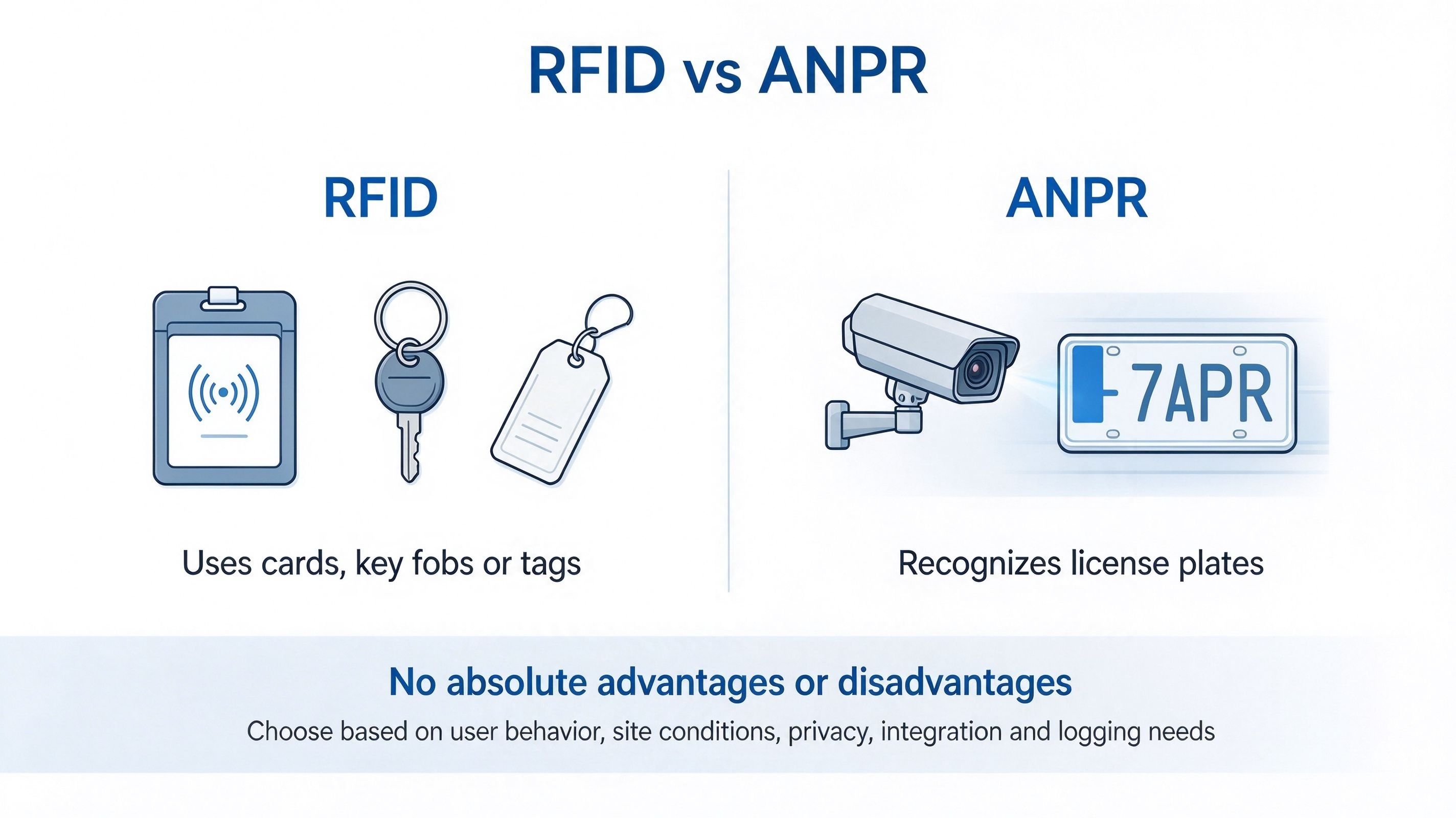
- RFID systems: Suitable for providing registered users, employees, residents and fleets with electronic cards or tags.
- ANPR/LPR systems: Suitable for locations where license plate recognition or vehicle entry/exit registration is required.
- Radar Sensors: Can be used in compatible configurations to detect vehicles or assist with safety, depending on model functionality and design.
3. Compare the mechanical structure, operating rate and basic parameters
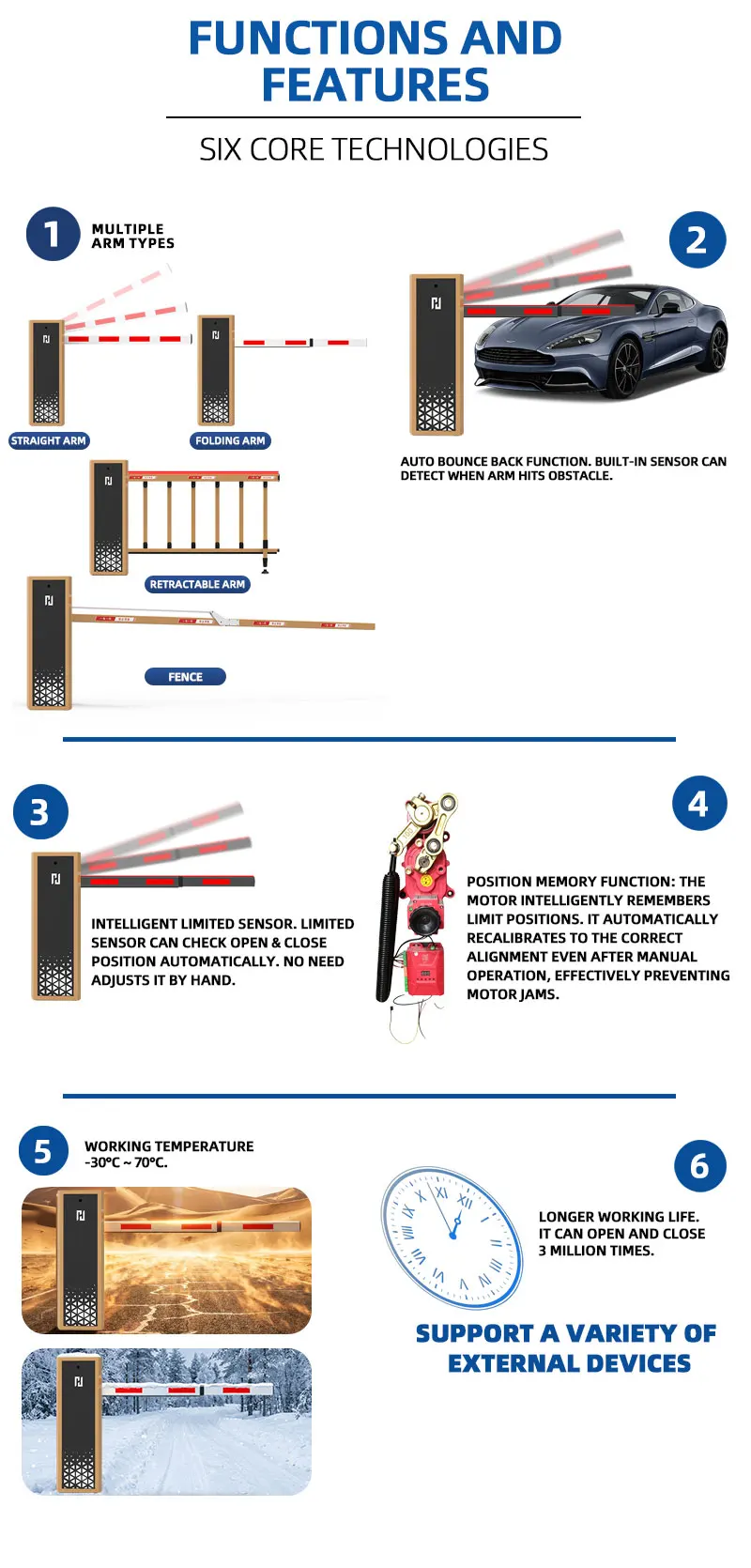
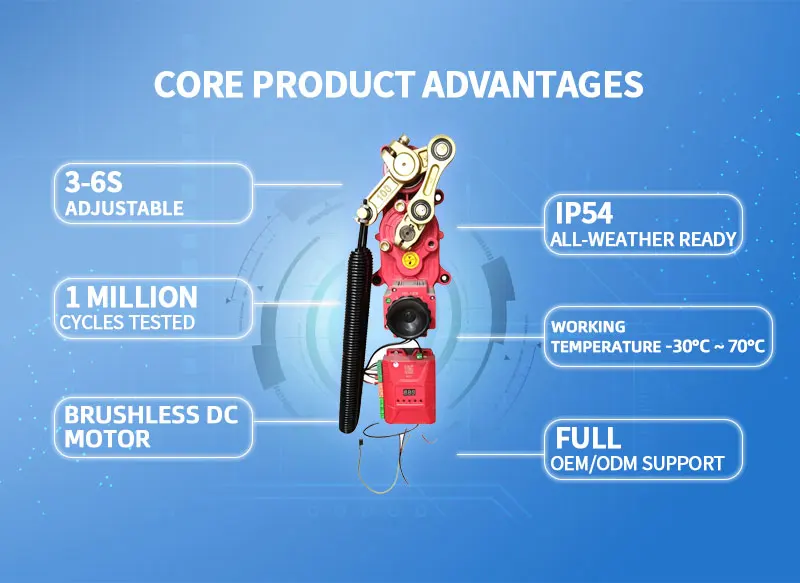
Ask each supplier for a data sheet for the proposed model, rather than just a general catalogue. Data must include, depending on the model, the arm length supported, opening and closing time, duty cycle or recommended frequency of use, operating temperature, degree of protection, power supply requirement, and emergency manual operation method.
The barrier specifications must match the actual site movement. Choosing a long arm or barrier with an inappropriate capacity may affect performance, while choosing a barrier that is slower than necessary may lead to the accumulation of vehicles during peak hours. In contrast, choosing the fastest model does not mean it is the best if traffic is low or if safety and control requirements are more important than speed.
Do not compare performance figures unless the measurement method and test conditions are similar. Request a written explanation of whether the stated speed is for a specific model, and whether it depends on arm length or operating settings. Each technical value must be verified in the manufacturer's document before being included in the final specification.
4. Evaluate integration potential with RFID, ANPR and existing systems
The site may need more than one mechanical barrier. Ask the supplier if the proposed configuration supports an RFID reader, ANPR/LPR camera, access control systems, or parking management software. Request a clear list of necessary components, including the console, software, interfaces, network connection, and any required licenses.
Don't assume that every barrier automatically corresponds to every reader or camera. You should check the type of signal or communication interface, the mechanism for sending the unlock command, how events are recorded, and what happens when the connection is lost or the card or board cannot be recognized. If the project uses an existing system, ask the supplier to confirm compatibility in writing or perform pilot testing before purchasing.
In locations that receive residents, employees and visitors, it may be useful to combine more than one vehicle identification method. But an integrated solution needs clear validity rules, centralized management, and testing for all scenarios, and should not be chosen simply to add more devices.
5. Evaluate safety design as a separate item
The supplier should explain how the barrier prevents the arm from closing on a vehicle or person, which detectors are compatible with the configuration, and how to test and maintain them. Ask about vehicle detection loops, radar sensors, or other protections that your model supports, and how to adjust them according to the manufacturer's instructions.
The display must also explain the behavior of the system when the power or network goes out, the sensor malfunctions, or communication with the recognition system is lost. Manual and emergency operating procedures should be clear, and responsibility for periodic testing and training should be established. Do not rely on general promises such as “completely safe” without a verifiable technical explanation.
Verify that the design does not create a danger to pedestrians or obstruct the emergency path, and that the location of the barrier, sensors and directional signs is appropriate for the entrance layout. The safety plan must be reviewed with the team responsible for the site prior to operation.
6. Compare build quality, warranty and ease of maintenance
Ask to clarify who manufactures the barrier, who sells it, installs it, and provides maintenance. The company may be a manufacturer, distributor, installation contractor or integration partner; Each model can be appropriate if responsibilities, guarantees and support are clear. What is important is to know who takes responsibility for the product and the complete system after delivery.
Ask how long the warranty is and what specifically it covers, including the motor, control unit, electronic parts and arm, and whether the warranty includes labor, parts and transportation to the site. Ask to know about exceptions, expected turnaround time, service request procedures, and availability of replacement parts for the proposed model.
Check that parts that require periodic inspection are easily accessible, and that a clear operation and maintenance manual is available. The supplier should outline the proposed maintenance schedule, consumable parts, and training required for the site team. It is also advisable to request references for similar projects, after obtaining the permission of their owners.
7. Compare the total cost of ownership, not just the starting price
The initial purchase price may be a small portion of the total cost. When comparing, add the cost of the barrier, arm, control unit, sensors, RFID reader or ANPR camera when needed, installation, extensions, configuration, licenses, training, maintenance and expected spare parts.
Ask each supplier to submit a detailed quote showing quantities, model numbers, components included and not covered, and the cost of additional work. Compare warranty, delivery period, maintenance plan and payment terms, and do not compare a single total price if the supply scopes are different.
An internal evaluation table can be used that gives weight to each criterion according to the priority of the project. For example, safety, compliance, and technical support may be more important in a high-traffic hallway, while ease of user management and operational cost may be more important in a small situation with fixed users. Weights should be determined before bids are received to reduce bias.
8. Check the delivery, installation and commissioning plan
The proposal should define the scope of works: preparing the base, installing the barrier, laying cables, connecting sensors, connecting the control system, configuring users or panel menus, testing and training. The responsibility for civil, electrical and network works must be specified and whether they are included in the price.
Before final receipt, request a documented acceptance test covering opening and closing, user or vehicle recognition, rejection scenarios, handling disconnections, safety functions, manual operation, and event logging. Notes must be processed and who is responsible for closing them must be determined before the receipt report is signed.
9. Warning signs when comparing suppliers
Pay attention to the supplier who offers a final price without visiting the site or collecting sufficient information about the portal. One should also be wary of general specifications that do not mention the model number, promise guaranteed performance in all conditions, or do not clarify the compatibility of the reader, camera, and software with the barrier.
Other signs include vague warranty, lack of a list of components, failure to specify after-sales service, refusal to provide operating and maintenance instructions, or pressure to make a quick decision without documenting requirements. These signs alone do not prove that the supplier is unreliable, but they warrant seeking written clarification before committing.
10. Practical questions to ask the parking barrier manufacturer or supplier
- What is the proposed model number, and what is its official data sheet?
- What is the appropriate boom length and operating range for our input?
- What usage rate does the model support under its intended operating conditions?
- Can it be linked to an RFID reader, ANPR/LPR camera or our existing system?
- What vehicle and obstacle detection devices does it support?
- What is included in the price, and what are possible additional costs?
- How long is the warranty, what is the service response time, and how are spare parts ordered?
- Does the offer include installation, configuration, training and acceptance testing?
- Can you provide references for similar projects or technical documentation of the product?
- Who bears responsibility for full integration if the devices are from more than one entity?
Frequently asked questions
Should I buy directly from the manufacturer or from a local supplier?
This depends on the scope of the project and the experience of the entity providing installation and support. The manufacturer may provide product information and replacement parts, while the supplier or integration partner may provide location, connectivity, and maintenance services. Compare responsibilities, experience, warranty, and actual support, not the brand name alone.
What is the most important criterion when comparing parking barriers?
There is no one standard that fits every project. Start by fitting the barrier to the site, then evaluate safety, compatibility with access systems, reliability, warranty, maintenance and overall cost. In high-traffic entryways, operability, integrity and safety may be critical factors.
Can the parking barrier be installed with RFID or ANPR?
This is possible if the barrier, controller, reader or camera and software are compatible. Require documentation of communication interfaces and control rules, and ensure that all ingress, egress, and failure conditions are tested prior to commissioning.
Is the cheapest price the best option?
Not necessarily. Low price may not include installation, sensors, configuration, training or maintenance. Compare scope of supply, warranty, spare parts availability and operating cost over the life of the system.
What documents should be requested before purchasing?
Request the official data sheet for the model, connection and integration diagram where needed, warranty terms, scope of works, maintenance schedule, operating manual, test and delivery plan. Save the final version of the specifications and the approved proposal within the project documents.
Conclusion
The best way to compare parking barrier manufacturers and suppliers in Qatar is to use standardized requirements and evaluate the product, system and service together. Check the suitability of the model for traffic, request specific technical data, test RFID or ANPR/LPR compatibility where necessary, review safety devices, warranty, spare parts, installation and maintenance plan.
The Qatar Boombarrier website showcases product categories including robotic boom barriers, RFID systems, ANPR/LPR and radar sensors, and can be used as a starting point for exploring available solutions. But the final purchasing decision should be based on a site inspection, official model documentation, a clear scope of supply and written service commitments, not on marketing texts or price alone.
Call to Action: Communicate to the sales team the location type, entrance width, vehicle traffic volume, desired control method, and any existing system. Request a technical recommendation and detailed quote detailing models, components, integration, warranty and service plan.
For more details on associated products and systems, see Vehicle Access Control Products.
Latest News
What Is the Best Parking Barrier for a Small Car Park?
How to choose a parking barrier for a small car park in Qatar, comparing arm length, duty cycle, RFID, ANPR/LPR, safety sensors and installation cost.
2026-10-29
How to Choose the Right Automatic Parking Barrier for Your Site
A practical guide to choosing the right automatic parking barrier in Qatar, covering arm length, operating speed, traffic density, RFID and ANPR systems, safety sensors and install...
2026-10-29
How to Choose a Parking Barrier for an Underground Car Park
A guide to choosing a parking barrier for underground car parks in Qatar, covering ceiling clearance, arm type, traffic density, safety sensors and RFID or ANPR/LPR access control.
2026-10-29
How to Compare Parking Barrier Manufacturers and Suppliers
A practical guide to comparing parking barrier manufacturers and suppliers in Qatar, covering product quality, RFID and ANPR compatibility, safety, warranty, support and total cost...
2026-10-29
What Should You Consider When Buying a Heavy-Duty Parking Barrier?
A buying guide for heavy-duty parking barriers in Qatar, covering duty cycles, arm length, motor type, dust and heat protection, safety sensors and RFID or ANPR/LPR integration.
2026-10-29
How Does an Automatic Parking Barrier System Work?
Discover how an automatic parking barrier system works in Qatar, from vehicle detection and RFID or ANPR/LPR verification to safe arm opening, closing and parking management integr...
2026-10-29
Qatar Boombarrier® | Leading Boom Barrier Manufacturer
Advanced Security Access Control and Intelligent Parking Solutions.
Company Strength
Adequate Inventory
Fast Shipping
Our Products
CONTACT US
Address: No. 2 Wanshou Road, International Innovation Industrial Park, Jinan, Shandong, China


© COPYRIGHT 2025 Qatar Boombarrier® | Leading Boom Barrier Manufacturer

Contact Us
Our passion is to bring your ideas to life. Work with our design team to create a one-of-a-kind custom finish or cladding system to create a truly unique space. Together we can make your story stand out. If you need something to request a sample, request pricing, or request a demo, please fill out the contact form below. Explain your request in as much detail as you can and a representative will contact you within 1 business day.