Qatar Boombarrier® | Leading Boom Barrier Manufacturer

What Is a Parking Barrier and How Does It Work?
Release time:
2026-10-29
Short answer: A parking barrier is a vehicle entry and exit control system, usually consisting of an operating unit, barrier arm and control panel, and can be linked to a remote control, RFID reader, automatic license plate recognition system (ANPR/LPR) or vehicle detection sensors. The system raises the arm when verifying access, then returns it to the closed position according to the control and safety settings.
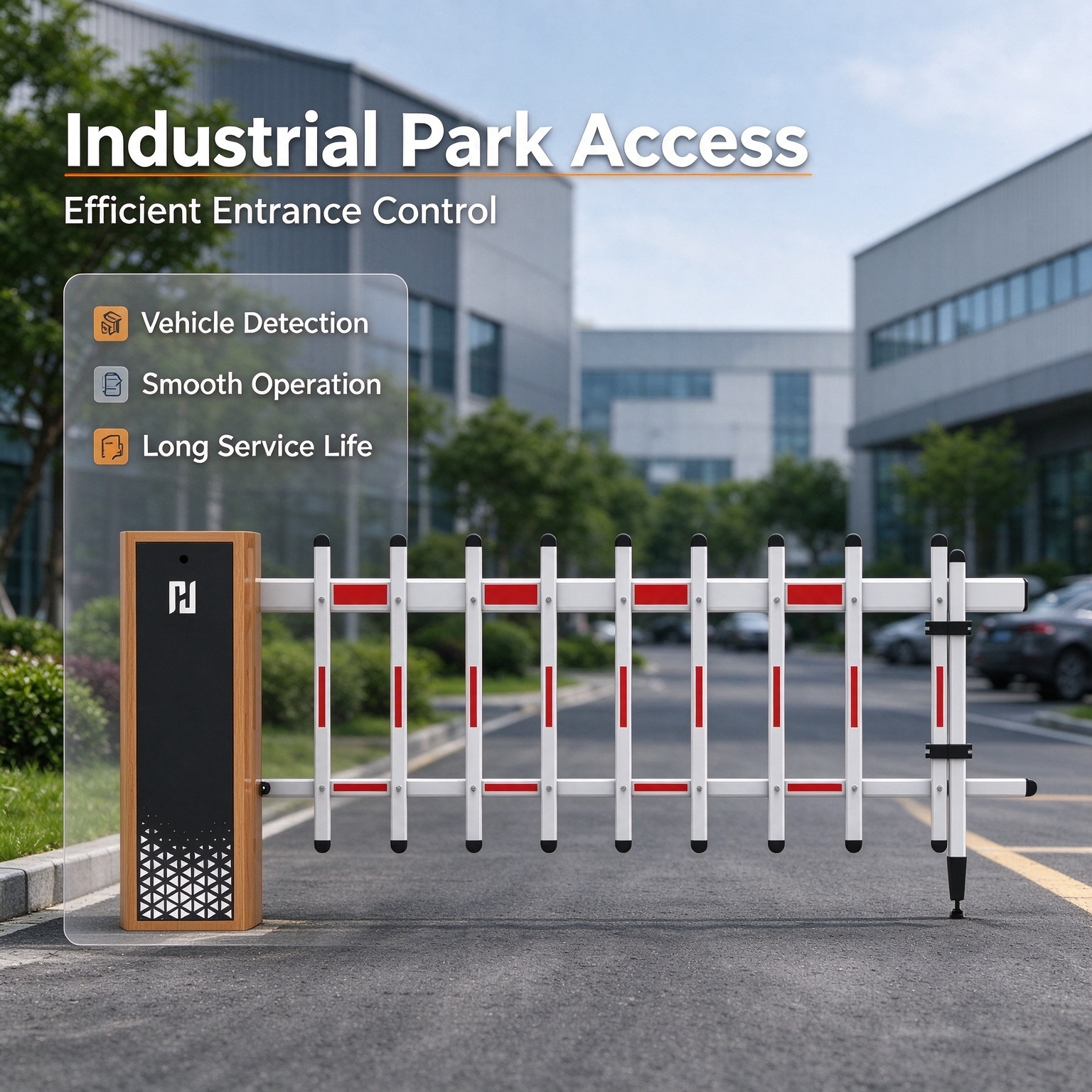
What is a parking barrier?
A parking barrier, also known as a motorized arm barrier or vehicle barrier gate, is an electro-mechanical barrier installed at the entrance or exit of a road to prevent the passage of unauthorized vehicles. It is used in parking lots for commercial buildings, residential complexes, hotels, hospitals, factories, warehouses, logistics areas and employee entrances.
On Qatar Boombarrier, product categories include conventional boom barriers, high-speed barriers, license plate recognition systems, RFID barriers, radar sensors and barrier accessories. The components can be chosen according to the nature of the location, the volume of traffic, and the method of vehicle verification.
How does an automatic parking barrier work?
1. The vehicle approaches the entry point
When the vehicle reaches the entry path, the system can detect it with a ground detection loop, radar sensor, or other compatible detection method. The detection signal helps coordinate the timing of opening the arm and prevents it from closing inappropriately while the vehicle is in the danger zone.
2. The system verifies the validity of the pass
The verification method varies depending on the site equipment. The operator may use a remote control or RFID card, the location relies on reading the vehicle plate via an ANPR/LPR camera, or connect the barrier to a ticketing, payment, or parking management software. The required means of verification and interfaces must be determined before choosing a model.
3. The controller receives the unlock command
After accepting the entry data, the control unit sends a command to the barrier motor. The motor and transmission mechanism move the lever to the open position. Opening and closing speed varies depending on model, lever length and settings; Therefore one should refer to the technical data sheet for the specific model rather than assuming a uniform speed for all barriers.
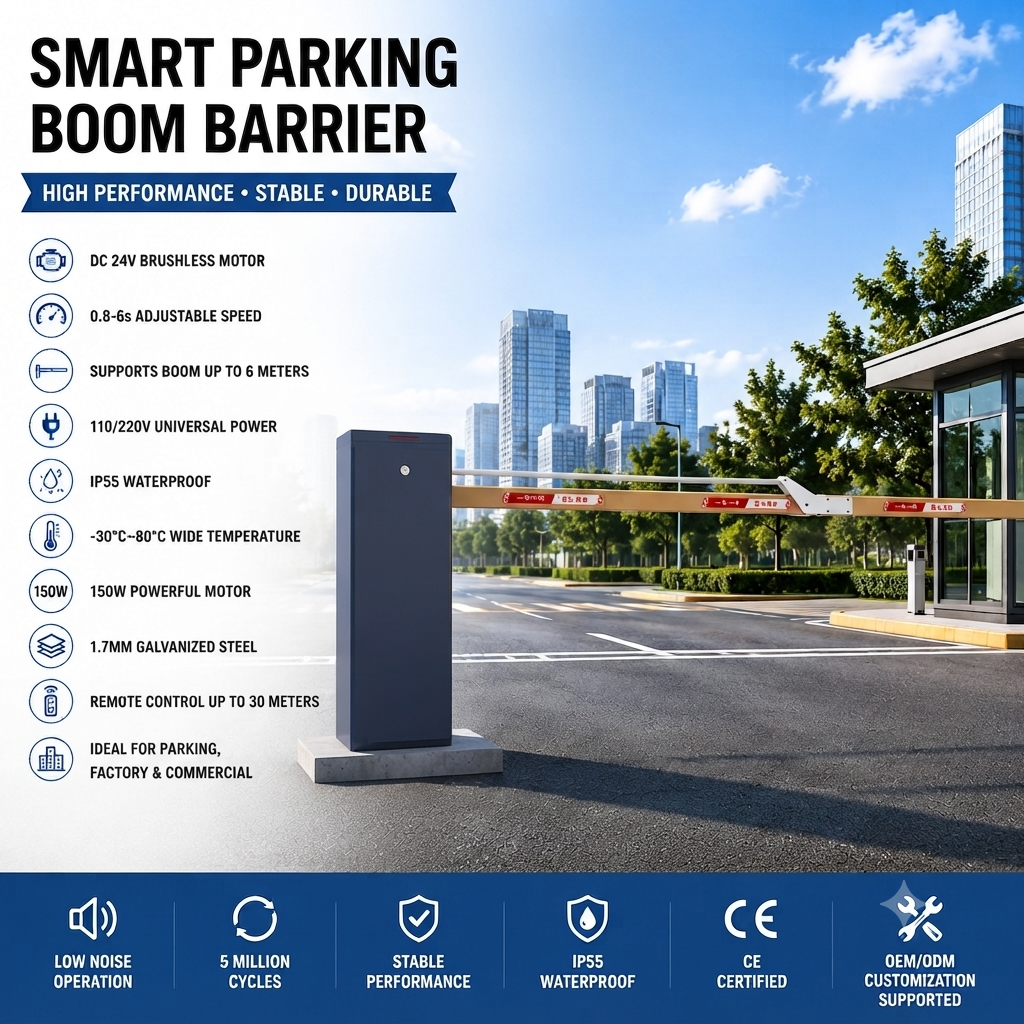
4. The vehicle passes and then the arm returns to closing
After the vehicle passes and leaves the detection area, the system can automatically close the arm according to the set control logic. Safety sensors and a detection loop or compatible control device must operate to prevent unsafe movement. A barrier alone should not be considered a substitute for safe traffic route design or site supervision.
What are the main components of a parking barrier?
- Barrier and chassis unit: Includes the operating assembly, mounting and protection parts.
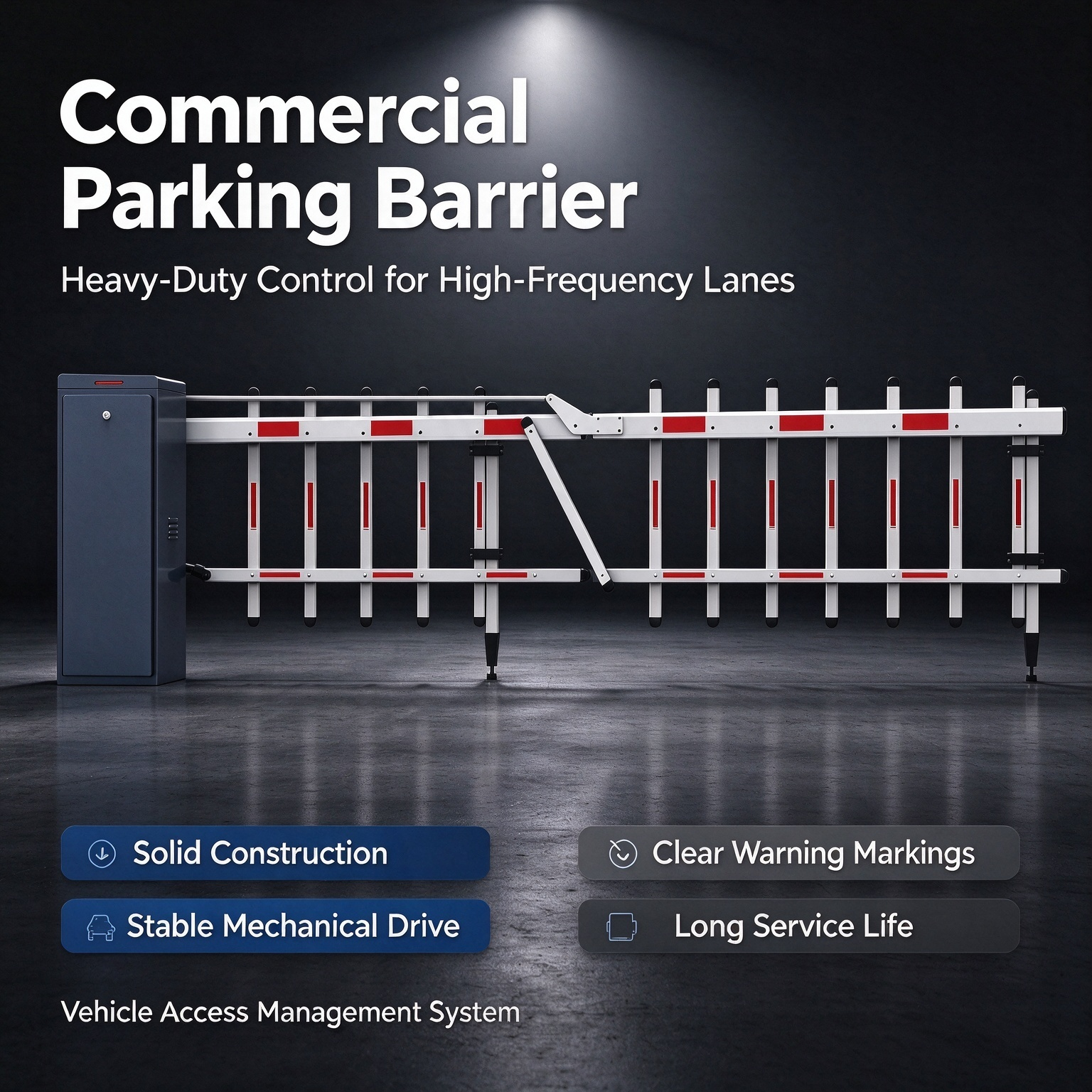
- Barrier arm: May be straight, folding or fence type, depending on entrance area, overhead restrictions and site requirements.
- Motor and movement mechanism: raises and lowers the arm; They must be chosen according to the intensity of use and arm length.
- Control panel: Coordinates opening and closing orders, sensor signals, and means of entry.
- Access Verification Devices: Such as a remote control, RFID reader, or ANPR/LPR camera, depending on the system.
- Safety and detection sensors: such as radar, ground detection loop, or infrared sensor, according to the approved configuration.
- Accessories and connections: May include warning lights, control devices and interfaces with the parking management system.
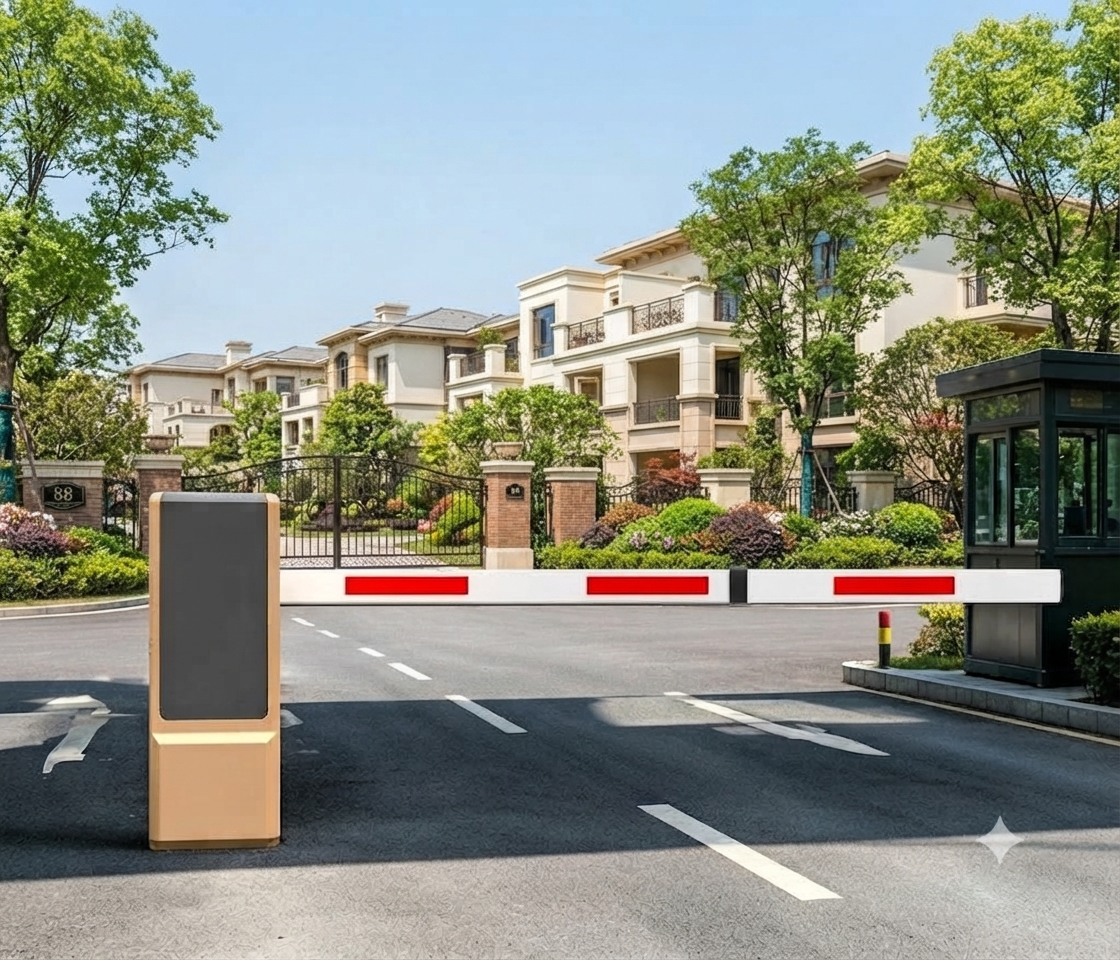
What is the difference between a traditional barrier and a barrier connected to a smart system?
The traditional barrier is often used with a guard's remote or button, and is suitable for locations where manual control is sufficient. As for the barrier connected to a smart system, it can be linked to an RFID reader, a vehicle plate recognition system, or a parking management platform, allowing the application of different entry rules and recording of traffic operations according to the capabilities of the system and the software used.
RFID barrier
An authorized vehicle is given an RFID card, sticker, or compatible means of identification, and its data is then read by a reader upon approach. This is suitable for employee parking lots, residential complexes, and fleets that frequently visit, provided that card permissions and procedures for canceling them are set when they are lost.
ANPR/LPR barrier
The camera picks up the vehicle's plate and tries to read it, then the system compares the result with the list of authorized vehicles or parking management rules. Accuracy depends on camera quality, lighting, shooting angle, plate condition, vehicle speed and system settings; Therefore performance must be tested in actual site conditions before final approval.
High speed barrier
A high-speed barrier may be suitable for entrances that experience heavy traffic or require reduced waiting time. However, the speed of the operating cycle must be compared with the length and weight of the arm, the number of daily operations and safety requirements, and the barrier should not be chosen based on the speed number alone.
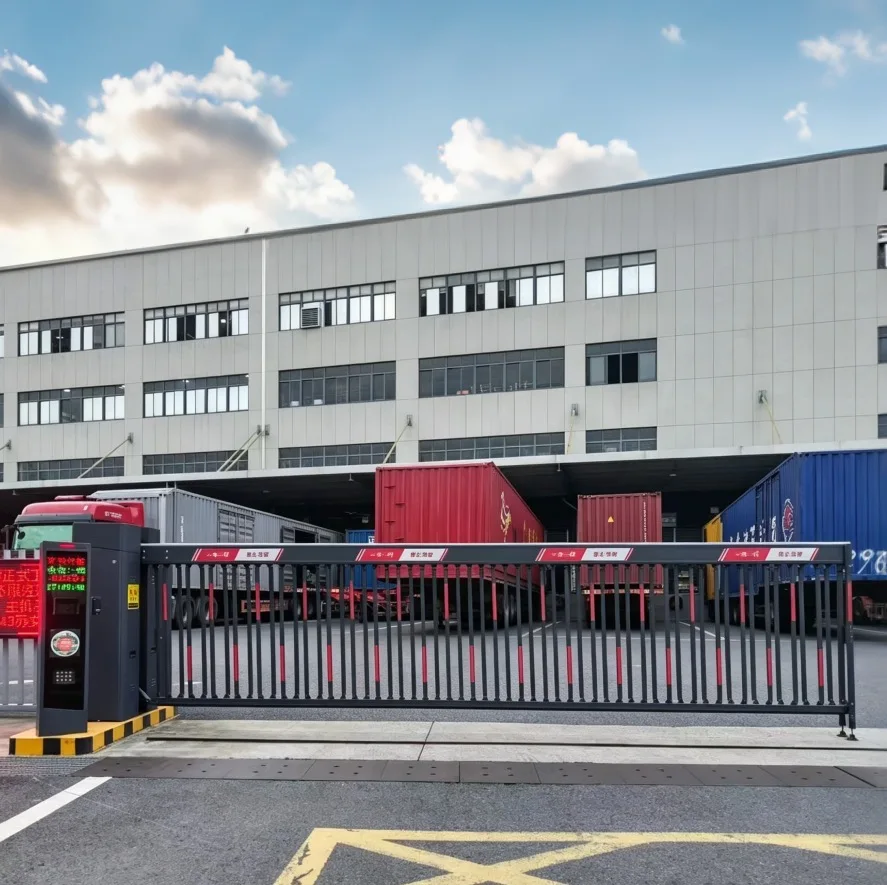
Where are parking barriers used in Qatar?
Vehicle barriers are used in parking lots of commercial towers, residential complexes, hotels, malls, hospitals, factories, warehouses and logistics areas. On sites with long hours or frequent traffic, powertrain durability, ease of maintenance, availability of spare parts, and system compatibility with existing infrastructure should be prioritized.
The outdoor environment in Qatar requires attention to heat, dust, sun exposure, humidity or coastal air depending on location. Review the operating temperature range, IP protection grade, materials, coatings and warranty conditions in the model data sheet, and ensure that installation and maintenance comply with the manufacturer's instructions.
How to choose the right parking barrier?
- Select location type: Residential parking lot, commercial tower, industrial facility, hotel or logistics area.
- Measure the track width and available height: Do not choose the boom length before measuring the track and checking for obstacles and the ceiling.
- Estimate traffic density: Calculate the expected number of vehicles at peak times and the number of daily operating cycles.
- Choose arm shape: Straight for typical open doorways, foldable when there are height restrictions, or fence arm when wider coverage is needed depending on the site design.
- Select verification method: Remote control, RFID, ANPR/LPR or integration with ticketing and payment system.
- Review Safety Items: Make sure the detection sensor and anti-lock mechanism on the vehicle are compatible with the track design.
- Check technical compatibility: Review communication interfaces, power requirements and control signals with existing parking software or security system.
- Request technical documentation: Model data, connection diagrams, foundation and installation requirements, warranty conditions and spare parts.
Maintenance and safe operation
Arm mounting, screws, frame, movement parts, cables and sensors should be checked periodically according to the manufacturer's instructions. Test the shutdown or anti-lock functions when a vehicle is detected, clean the sensors, and watch for unusual sounds or vibrations. Electrical and mechanical maintenance work must be carried out by a qualified technician, with the power disconnected and the work area secured in accordance with safety procedures.
Do not allow pedestrians to use the vehicle path as a safe pedestrian path. Where both people and vehicles need to be managed, a separate pedestrian access control system such as turnstiles or dedicated barriers, with clear design of routes and signage, can be considered.
Frequently asked questions
Can the parking barrier be operated automatically?
Yes. The barrier can operate automatically upon receiving an approved signal from a controller, RFID reader, ANPR/LPR system or parking control unit, if the model supports the required attachment method and the system is properly set up and tested.
Can the parking barrier be linked to vehicle plate recognition?
This is possible when the barrier and ANPR/LPR system are compatible in terms of control signals, software and communication interfaces. Integration details should be confirmed with the vendor, including ingress and egress scenarios, authorized list management, event logging, and handling of read failures.
How quickly does the barrier open?
There is no one speed that fits all models. Speed depends on motor design, boom length, operating settings and safety requirements. Request the data sheet for the specific model, and compare the cycle time with the actual traffic on the site.
Does the long arm barrier fit all doorways?
Not necessarily. The long arm needs precise matching of track width, mechanism design, installation and safety requirements. The maximum approved length for the model must be confirmed, and it should not be assumed that a specification for one product applies to all models.
What information should be sent to the supplier to request a recommendation?
Submit facility type and installation location, available track width and height, peak traffic volume, expected number of operating cycles, verification method required, systems to be integrated with, and outdoor installation conditions. This information helps determine the appropriate configuration and prepare a more accurate technical quote.
Conclusion
The parking barrier is not just a lever that opens and closes; Rather, it is part of the vehicle entry system that may include the engine, control unit, verification devices, sensors, and parking management software. The correct choice depends on the entrance geometry, traffic density, safety and integrity requirements, and environmental conditions. Before purchasing, request actual model data and ensure all components are compatible with location requirements in Qatar.
Call to Action: Contact the Qatar Boombarrier team to determine your entrance requirements and get the right technical recommendation and model data for your project.
For more details on related products and systems, see Boom Barriers and Parking Gates.
Latest News
What Is the Best Parking Barrier for a Small Car Park?
How to choose a parking barrier for a small car park in Qatar, comparing arm length, duty cycle, RFID, ANPR/LPR, safety sensors and installation cost.
2026-10-29
How to Choose the Right Automatic Parking Barrier for Your Site
A practical guide to choosing the right automatic parking barrier in Qatar, covering arm length, operating speed, traffic density, RFID and ANPR systems, safety sensors and install...
2026-10-29
How to Choose a Parking Barrier for an Underground Car Park
A guide to choosing a parking barrier for underground car parks in Qatar, covering ceiling clearance, arm type, traffic density, safety sensors and RFID or ANPR/LPR access control.
2026-10-29
How to Compare Parking Barrier Manufacturers and Suppliers
A practical guide to comparing parking barrier manufacturers and suppliers in Qatar, covering product quality, RFID and ANPR compatibility, safety, warranty, support and total cost...
2026-10-29
What Should You Consider When Buying a Heavy-Duty Parking Barrier?
A buying guide for heavy-duty parking barriers in Qatar, covering duty cycles, arm length, motor type, dust and heat protection, safety sensors and RFID or ANPR/LPR integration.
2026-10-29
How Does an Automatic Parking Barrier System Work?
Discover how an automatic parking barrier system works in Qatar, from vehicle detection and RFID or ANPR/LPR verification to safe arm opening, closing and parking management integr...
2026-10-29
Qatar Boombarrier® | Leading Boom Barrier Manufacturer
Advanced Security Access Control and Intelligent Parking Solutions.
Company Strength
Adequate Inventory
Fast Shipping
Our Products
CONTACT US
Address: No. 2 Wanshou Road, International Innovation Industrial Park, Jinan, Shandong, China


© COPYRIGHT 2025 Qatar Boombarrier® | Leading Boom Barrier Manufacturer

Contact Us
Our passion is to bring your ideas to life. Work with our design team to create a one-of-a-kind custom finish or cladding system to create a truly unique space. Together we can make your story stand out. If you need something to request a sample, request pricing, or request a demo, please fill out the contact form below. Explain your request in as much detail as you can and a representative will contact you within 1 business day.